Welcome, Guest. Please login or register.

Author Topic: Trump supporters and conspiracy theory - Part 2  (Read 1111482 times)

Offline Rick Plant

  • Hero Member
  • *****
  • Posts: 8177
Re: Trump supporters and conspiracy theory - Part 2
« Reply #5474 on: July 12, 2022, 01:05:41 AM »
Questions raised about Trump-loving preacher's sudden massive cash haul and spending spree


Questions are being raised about a California pastor and failed Republican Party House candidate who jumped on the Trump train and saw revenue for ministry -- where he is the only employee -- jump from $280,000 in 2019 to more than $5.3 million in just one year allowing him to go on a property buying spree that primarily benefits only himself.

According to a report from Rolling Stone's Tim Dickinson and Kara Voght, 38-year-old Sean Feucht went from a little-known Christian singer and evangelist to a MAGA star by aligning himself with former president Donald Trump, thereby raising his profile to the point where he stood on the steps of the Supreme Court with far-right Reps. Marjorie Taylor Greene (R-GA) and Lauren Boebert (R-CO) when a report was leaked that the Supreme Court would be gutting Roe V Wade.

Noting that Feucht was on the way up when balked at crowd restrictions at his events during the Covid-19 pandemic, the report claims he has been cashing in in a big way although his financial filings aren't particularly clear where the cash is coming from.

Writing, "Feucht’s fusion of own-the-libs rhetoric and Christian zealotry is resonating," the report states, "Capitalizing on the notoriety of his 2020 Covid-lockdown protests, Sean Feucht Ministry Inc. ballooned in revenue from $280,000 in 2019 to more than $5.3 million in 2020, ending the year $4 million richer than it started. (The accounting for this surge is curious: The ministry claims to have received zero dollars in contributions, despite Feucht avidly soliciting such gifts.)"

With that money, the evangelical invested in several properties described by Rolling Stone as "extravagant homes, one in a glitzy gated community in Southern California and another on five acres in Montana, valued together at well over $2 million."

Add to that, he also "purchased a brick row house on Capitol Hill in May for nearly $1 million," which he has called Camp Elah which he reportedly will use as a basecamp while he meets with conservative lawmakers.

All of those purchases have not gone unnoticed by watchdogs and ethics experts who, while not accusing him of criminality, wonder how he came into so much money and question the ways in which he is spending it.

"Warren Cole Smith, president of Ministry Watch, which vets religious organizations on behalf of donors, says that leveraging a ministry to live the high life, if that’s what Feucht is doing, is not just unseemly, it’s potentially illegal, " with Smith pointing out, "I’m not saying that Sean is guilty of private inurement. But if a guy that makes less than $200,000 a year is buying multiple, million-dollar properties, at a minimum that warrants additional questions.”

Adding that calls to Feucht and his ministry's board members have been fruitless, the report adds, "Evangelicals have long hitched their fortunes to GOP political movements, most recently the Trump train. But Feucht is bold in his declaration that Christians, themselves, should seize the throttle of the nation’s politics."

Right-wing extremism expert Shawn Schwaller views that as a red flag.

“He wants to push a far-right Christian nationalist agenda. Whether it’s anti-LGBTQ rights,anti-vaccine, anti-Black Lives Matter, he’s aligning himself with the biggest voices pushing that agenda in Washington," he explained.

Religion expert Adam Perez, a postdoc at the Duke School of Divinity, has questions about his devotion to religion.

"Is this God’s work? Or is this the power of money — you know, the love of which is the root of all evil?” he asked rhetorically.

https://www.rawstory.com/sean-feucht-2657648111/

Offline Rick Plant

  • Hero Member
  • *****
  • Posts: 8177
Re: Trump supporters and conspiracy theory - Part 2
« Reply #5475 on: July 12, 2022, 06:03:19 AM »
‘Stop the Steal’ organizers feared Trump’s paramilitary groups: Bannon associate


On MSNBC Monday, anchor Ari Melber interviewed Dustin Stockton, an associate of Trump ally Steve Bannon, who claimed that many organizers of the January 6 "Stop the Steal" rally for Trump were afraid of, and tried to distance themselves from, the extremist paramilitary groups like the Proud Boys and Oath Keepers gathering to storm the Capitol.

While many of the attendees of that rally did ultimately join the attack on the Capitol, Stockton, who worked on Bannon's fraudulent "We Build The Wall" project, insists the groups didn't coordinate — and took a swipe at Trump for encouraging the extremists.

"The Select Committee has information about contacts between far-right operatives and rally organizers," said Melber. "You were on the inside. You've talked to the committee about the split. Did you witness in any way other organizers working directly with those militia groups or having a plan to turn a rally into an invasion at the Capitol."

"We definitely saw — there was a definitive split between the group that put together the ellipse, the rally at the Ellipse in the morning, and the group who was planning a rally at the Capitol," said Stockton. "In fact, the group that was putting on the rally at the Ellipse made several efforts to stop any other rallies from happening, specifically in part because the people who were organizing it were using vastly different rhetoric than we were using, far more revolutionary and violent."

"Let me ask you ... when you talk about that rhetoric, did you hear it before the 6th as storming the Capitol, was it that precise, those folks?" Melber asked.

"It wasn't — it's hard to go back and look now and say what was rhetorical and what wasn't," Stockton replied. "What we remember, though, is that tensions were extremely high, and we had an obligation to tamp those down to be able to present ourselves as a reasonable political movement. And there were people who were not following that, and they were the ones pushing people to go to the Capitol, and we were pushing our people not to participate in that in any way, and of course when Trump sent people to the Capitol, it felt like an affront to us that he had kind taken that more radical side and made no sense to us."

Watch:


Offline Rick Plant

  • Hero Member
  • *****
  • Posts: 8177
Re: Trump supporters and conspiracy theory - Part 2
« Reply #5476 on: July 12, 2022, 06:09:43 AM »
Judge refuses to delay Steve Bannon's trial for contempt of Congress


A judge ruled Monday that Steven Bannon's trial for contempt of Congress will not be delayed and will move forward as planned, NBC News reports.

Bannon was indicted last year for ignoring a subpoena from the Jan. 6 committee, but changed his mind over the weekend and agreed to appear. According to the Justice Department, Bannon's last-minute offer to testify was nothing more than a “last-ditch attempt to avoid accountability.”

Bannon's lawyer attributed his change of heart to a letter from former President Donald Trump that waived a purported claim of executive privilege. But as NBC News points out, the Justice Department says Bannon's own lawyer told the FBI that Trump “never invoked executive privilege over any particular information or materials" and offered no basis for Bannon's "total noncompliance" with his subpoena.

"Judge Carl Nichols, who previously ruled that Bannon could not argue that he was not guilty because he was relying upon the advice of his lawyer, ruled Monday that Bannon cannot present evidence that he relied upon old opinions from the Justice Department's Office of Legal Counsel (OLC) regarding executive privilege either," reports NBC News.

Bannon was among dozens of people called to testify on last year's assault on the Capitol aimed at shutting down Congress over former president Donald Trump's baseless claims that Joe Biden won the 2020 election due to voter fraud.

Investigators believe Bannon and other Trump advisors could have information on links between the White House and the mob that invaded the Capitol on the day it was due to certify Biden as winner.

Although he was not a White House employee or official Trump aide, Bannon's attorneys had previously claimed he was protected by presidential executive privilege and did not have to cooperate with the committee.

According to the letter explaining his about-face, Bannon told the House Select Committee that "circumstances have now changed."

"President Trump has decided that it would be in the best interests of the American people to waive executive privilege for Stephen K. Bannon, to allow Mr. Bannon to comply with the subpoena issued by your Committee."

In November last year, Bannon turned himself in to the FBI to face charges of contempt of Congress after refusing to testify on the January 6 Capitol assault.

"I'm never going to back down," he told reporters at the time after appearing before a judge to hear the charges.

"We're going on the offense on this. And stand by," he said, repeating the phrase Trump used during the election in 2020 to encourage supporters of a far-right militia group.

Bannon, 68, was indicted by a grand jury with two misdemeanor counts of contempt, each one carrying a penalty of one month to one year in jail, and a fine of up to $100,000.

The attack, which left five people dead, succeeded in delaying the joint House-Senate election certification session for several hours.

Read More Here:

https://www.nbcnews.com/politics/justice-department/judge-wont-delay-steve-bannons-trial-last-minute-offer-cooperate-jan-6-rcna37667

Offline Rick Plant

  • Hero Member
  • *****
  • Posts: 8177
Re: Trump supporters and conspiracy theory - Part 2
« Reply #5477 on: July 12, 2022, 06:31:06 AM »
Right-wing think tank Family Research Council is now a church in the eyes of the IRS
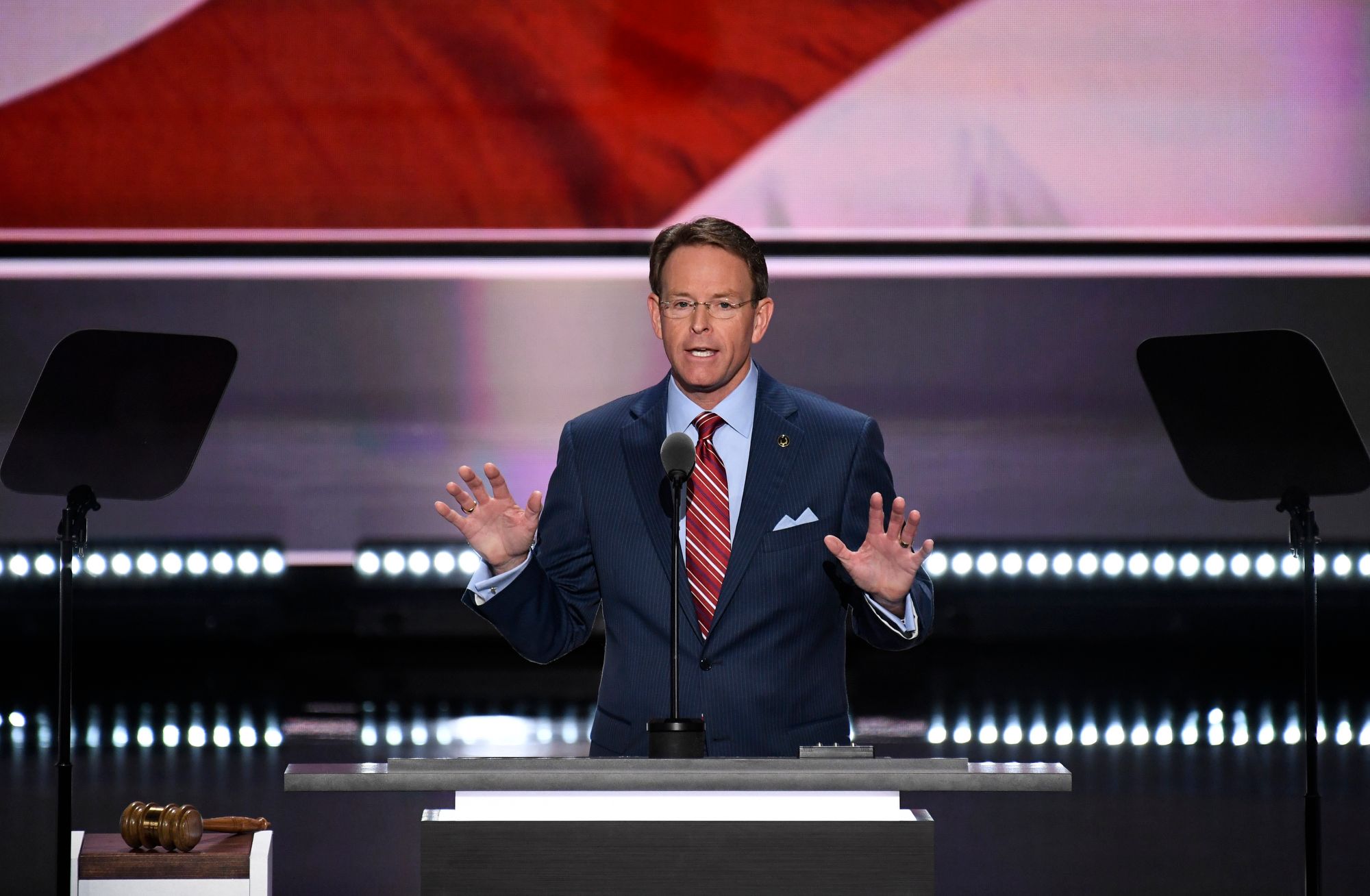


The Family Research Council’s multimillion-dollar headquarters sit on G Street in Washington, D.C., just steps from the U.S. Capitol and the White House, a spot ideally situated for its work as a right-wing policy think tank and political pressure group.

From its perch at the heart of the nation’s capital, the FRC has pushed for legislation banning gender-affirming surgery; filed amicus briefs supporting the overturning of Roe v. Wade; and advocated for religious exemptions to civil rights laws. Its longtime head, a former state lawmaker and ordained minister named Tony Perkins, claims credit for pushing the Republican platform rightward over the past two decades.

What is the FRC? Its website sums up the answer to this question in 63 words: “A nonprofit research and educational organization dedicated to articulating and advancing a family-centered philosophy of public life. In addition to providing policy research and analysis for the legislative, executive, and judicial branches of the federal government, FRC seeks to inform the news media, the academic community, business leaders, and the general public about family issues that affect the nation from a biblical worldview.”

In the eyes of the Internal Revenue Service, though, it is also a church, with Perkins as its religious leader.

According to documents obtained via the Freedom of Information Act and given to ProPublica, the FRC filed an application to change its status to an “association of churches,” a designation commonly used by groups with member churches like the Southern Baptist Convention, in March 2020. The agency approved the change a few months later.

The FRC is one of a growing list of activist groups to seek church status, a designation that comes with the ability for an organization to shield itself from financial scrutiny. Once the IRS blessed it as an association of churches, the FRC was no longer required to file a public tax return, known as a Form 990, revealing key staffer salaries, the names of board members and related organizations, large payments to independent contractors and grants the organization has made. Unlike with other charities, IRS investigators can’t initiate an audit on a church unless a high-level Treasury Department official has approved the investigation.

The FRC declined to make officials available for an interview or answer any questions for this story. Its former parent organization, Focus on the Family, changed its designation to become a church in 2016. In a statement, the organization said it made the switch largely out of concern for donor privacy, noting that many groups like it have made the same change. Many of them claim they operated in practice as churches or associations of churches all along.

Warren Cole Smith, president of the Christian transparency watchdog MinistryWatch, said he believes groups like these are seeking church status with the IRS for the protections it confers.

“I don’t believe that a lot of the organizations that have filed for the church exemption are in fact churches,” he said. “And I don’t think that they think that they are in fact churches.”

The IRS uses a list of 14 characteristics to determine if an organization is a church or an association of churches, though it notes that organizations need not meet all the specifications. The Family Research Council answered in the affirmative for 11 of those points, saying that it has an array of “partner churches” with a shared mission: “to hold all life as sacred, to see families flourish, and to promote religious freedom.” The group says there is no set process for a church to become one of the partners that make up its association, but it says partners (and the FRC’s employees) must affirm a statement of faith to do so. It claims there are nearly 40,000 churches in its association, made up of different creeds and beliefs — saying that this models the pattern of the “first Christian churches described in the New Testament of the Bible.”

Unlike the Southern Baptist Convention, whose website hosts a directory of more than 50,000 affiliated churches, the FRC’s site does not list these partners or mention the word “church” anywhere on its home page. The FRC’s application to become an association of churches didn’t include this list of partner churches, nor did it provide the names to ProPublica.

To the question of whether the organization performs baptisms, weddings and funerals, the FRC answered yes, but it said it left those duties to its partner churches. Did it have schools for religious instruction of the young? That, too, was the job of the partner churches.

The FRC says it does not have members but a congregation made up of its board of directors, employees, supporters and partner churches. Some of those partner churches, it says, do have members.

Does the organization hold regular chapel services? According to the FRC’s letter to the IRS, the answer is yes. It wrote that it holds services at its office building averaging more than 65 people. But when a ProPublica reporter called to inquire about service times, a staffer who answered the phone responded, “We don’t have church service.” Elsewhere in the form, it says that the employees make up those who attend its services.

The organization’s claim to be an association of churches is disingenuous, said Frederick Clarkson, who researches the Christian right at nonpartisan social justice think tank Political Research Associates.

“The FRC can say whatever bulls**t things they want to,” he said. “The IRS should recognize it as a bad argument.”

Three experts told ProPublica that the IRS is failing to use its full powers to determine who gets the special privileges afforded to churches. And when a group like the FRC appears to push the limits of what charities are allowed to do — particularly relating to their partisan political activity — the IRS doesn’t often step in to crack down. The IRS did not answer a list of detailed questions for this story or make anyone available for an interview.

David Cary Hart, an activist and writer who received the FRC’s reclassification documents via a Freedom of Information Act request, wrote a letter to the IRS questioning the decision, saying the approval “defies regulatory logic.”

When ProPublica relayed details of the FRC’s new church designation to Senate Finance Committee Chairman Sheldon Whitehouse, D-R.I., he decried the loss of transparency and lax IRS oversight. “It is far too easy for powerful special interests to hide their donors using webs of nonprofits,” he said in a statement. “Form 990 filings provide valuable, and often the only, insight into a tax-exempt organization’s income and spending. But lax enforcement at the IRS and DOJ encourage more game-playing, which leaves the door wide open for enterprising dark-money schemes to exploit the system further.”

A Wave of Conversions

The current wave of nonprofit-to-church conversions appears to have gained steam after 2013, when the head of the Billy Graham Evangelistic Associationaccused the IRS of targeting BGEA and another charity he heads with audits after the group took out newspaper ads supporting a North Carolina constitutional amendment defining marriage as between one man and one woman. The groups, BGEA and Samaritan’s Purse, retained their tax-exempt status, and in 2015, they applied for church status and got it.

In 2018, Liberty Counsel, a Florida-based legal nonprofit, was reclassified as an “association of churches” — though it had been categorized as a “church auxiliary” affiliated with Jerry Falwell’s megachurch since 2006, granting the organization many of the same exemptions that churches get. The organization represents Kim Davis, the Kentucky county clerk who refused to issue licenses for same-sex marriages. Just days after the Supreme Court cited a Liberty Counsel brief in its June decision overturning Roe v. Wade, a staffer for the organization was recorded saying she prays with conservative justices inside the court building — raising questions about conflicts of interest. (Liberty Counsel denies that the staffer prayed with justices.) In a written statement, founder and chairperson Mathew Staver said that the organization’s legal work is just one part of its activity, and that it made the change “to accurately reflect the operation of the ministry.”

The American Family Association, a Tupelo, Mississippi-based group that runs the influential American Family Radio network, as well as a film studio and magazine, changed its designation to a church in early 2022, according to IRS data. The association sends out frequent “action alerts” to subscribers asking them to sign petitions opposing government appointees or boycott media and brands that it has identified as supporting LGBTQ rights or abortion access. The organization declined to respond to a request for comment.

In its letter to the IRS, the FRC argued that the classification change would protect its religious liberty rights. As an example, it pointed to Treasury Department rules exempting church organizations from the mandatory coverage requirements for contraceptives.

Churches also have a “ministerial exemption” to hiring discrimination laws for religious leaders — meaning, for example, that a Catholic church may exclude women when hiring priests. Courts have interpreted this protection broadly, shielding churches from claims of discrimination for sexual orientation as well. Recent Supreme Court rulings have broadened the umbrella of staffers who may be included under the exemption.

According to IRS data, the FRC has submitted a 990 tax return for its 2021 fiscal year, but the agency has not yet released the filing. The organization is also a member of the Evangelical Council for Financial Accountability, a voluntary membership organization that collects revenue, expenses, assets and a small number of other top-line financials from its members. The organization does not collect more detailed financial data reported on the 990.

Over the five years ending June 2020, the FRC saw average revenues of $15.9 million each year, and it spent an average of $15.6 million. In its fiscal year 2021, the FRC reported to ECFA, it brought in $23.1 million and spent $20 million. In the most recent 990, Perkins made about $300,000.

The IRS did not answer questions about how many groups apply to become a church and how many applications it denies. Samuel Brunson, a law professor specializing in religion and tax exemption at Loyola University Chicago, said the federal government, and especially the IRS, are typically very cautious when it comes to making judgments about defining religion.

“The First Amendment makes [defining a religion] really hard,” he said.

Brunson pointed to the Satanic Temple, which received IRS church recognition in 2019, as an example of an organization that people may not consider one. The group has made headlines over the years for mounting First Amendment challenges such as suing to have a statue of the goat-headed occult icon Baphomet placed next to statues of the Ten Commandments in public places. The temple is now suing Texas, claiming that the state’s abortion restrictions inhibit the liberty of the organization’s members to practice their religious rituals.

Lucien Greaves, a founder of the Satanic Temple, said groups like Liberty Counsel and the FRC have for years implied his organization is too political to be a church — one of the reasons the group finally sought official recognition. The fact that those same organizations are now themselves churches, he said, is hypocritical.

“People act like ... we’re trying to get away with something: ‘Look, these guys want to be a church, and yet they’re active in these public campaigns,’” he said. “And they never apply those same questions to the other side.”

Politics and the Pulpit

The Southern Poverty Law Center classifies the FRC, Liberty Counsel and the American Family Association as hate groups for their anti-LGBTQ stances and advocacy. But Clarkson, the researcher, said focusing on that designation misses the larger sphere of the FRC’s political influence. In recent years, he said, the FRC’s rhetoric and actions have influenced politics away from democracy and in a direction that is “distinctly theocratic.”

“Abortion and LGBT issues are not the war,” he said. “They’re battles in the war.”

IRS rules prohibit public, tax-exempt charities including churches from “directly or indirectly participating in, or intervening in, any political campaign on behalf of (or in opposition to) any candidate for elective public office.” That rule, known as the Johnson Amendment, dates back to 1954. Short of explicit political endorsements, these groups may participate in what’s known as “issue advocacy” including voter education. They can also lobby for political causes connected to their core missions, as long as the lobbying activity is not a “substantial part” of their activities.

To run its more direct political activities, the FRC has another tax-exempt organization, called a social welfare organization, that actively endorses candidates and lobbies for legislation — Family Research Council Action. The arms separate out messaging on two websites, with the FRC hosting issues-based content supporting its Christian worldview and linking to the Family Research Council Action website for content that explicitly endorses candidates.

Family Research Council Action is registered at the same address as the FRC and shares all five of the part-time employees it lists on its tax form, including Perkins. This is legal so long as the organizations are careful to separate activities and accounting, such that tax-deductible charity dollars aren’t supporting political work by the social welfare organization, said Philip Hackney, a tax law professor at the University of Pittsburgh. Experts say ideally a group like Family Research Council Action would have at least one independent staffer to indicate that it’s actually operating as an independent entity.

But FRC Action lists zero full-time employees on its most recent tax filing. When Perkins — who is president of both organizations — is speaking, he rarely makes a delineation about whether he is speaking as the head of the FRC or the head of Family Research Council Action.

But even for charitable operations, the lines around political activities are open to interpretation. While the FRC and other evangelical groups have pushed for the removal of all restrictions on political speech by churches for years, the FRC also releases guidelines encouraging pastors to discuss political matters while staying within the bounds of the law, noting that “there are legal limits to what churches may do, but your hands are not completely tied. In fact, you may be surprised at how much influence you can have.”

On Perkins’ radio show, “Washington Watch,” he hosts a bevy of pro-Donald Trump lawmakers and political figures every day. Its annual Pray Vote Stand Summit, formerly known as the Values Voter Summit, is one of the largest and most influential gatherings for those on the Christian right, where politicians, including Trump during his presidency, talk strategy with religious organizers. In 2021, the event’s schedule included “The Battle for America’s Classrooms: Fighting Indoctrination on a National Scale,” “The End of Roe and Beyond: The Outlook for the Unborn in America” and “A Mandate for Disaster: How States Are Fighting Biden’s Vaccine Tyranny” — the last event featuring the Ohio and Arkansas attorneys general and Perkins. The event was hosted by both the FRC and FRC Action.

In December 2020, Perkins — reportedly a close confidant of Trump’s during his presidency — signed a letter containing the false claims that state officials violated election laws and that “there is no doubt President Donald J. Trump is the lawful winner of the presidential election.” The letter called on state lawmakers to appoint a new slate of electors to override the election President Joe Biden won. Perkins signed as “President, Family Research Council.”

Experts say it’s not clear whether seeking to influence an election after it’s already happened would run afoul of the nonprofit campaign prohibitions.

But it’s rare for a nonprofit to face a challenge for political campaign speech. A 2020 Government Accountability Office report found that, between 2010 and 2017, the IRS examined just 226 of more than 1.5 million tax-exempt organizations for political activity. It sent a written warning to 56% of the organizations it examined and took additional action in just 10% of cases.

Scrutinizing the fuzzy line between FRC and FRC Action, or getting involved in how far out of the gray area a charity may have strayed, is not something that authorities are keeping a close eye on, said Frances Hill, a law professor specializing in tax and election law at the University of Miami. “It would take some sort of an earthquake to make the IRS use its time looking into these matters,” she said.

https://www.propublica.org/article/family-research-council-irs-church-status

Offline Matt Grantham

  • Hero Member
  • *****
  • Posts: 902
Re: Trump supporters and conspiracy theory - Part 2
« Reply #5478 on: July 12, 2022, 06:42:48 AM »
 Contempt for congressional subpoenas, lying ti the FBI, constant looming indictments, a continued faith in Russiagate lies Six years of delusion and counting

Offline Rick Plant

  • Hero Member
  • *****
  • Posts: 8177
Re: Trump supporters and conspiracy theory - Part 2
« Reply #5479 on: July 12, 2022, 07:01:58 AM »
Trump Faces Triple Threat as Three Investigations Ramp Up in Same Week

Donald Trump faces a particularly turbulent week as significant developments are expected in a number of investigations surrounding him.

Over the next seven days, criminal, civil and Congressional panels investigating incidents where Trump is implicated will all hear key testimonies as part of ongoing proceedings.

On Tuesday, the House Select Committee investigating the events of January 6, 2021 is set to stage its latest hearing on the events leading up to the Capitol riots. The committee's seventh live televised hearing is set to focus on connections between the Trump administration and far-right extremist groups such as the Oath Keepers and Proud Boys.

Members of the Congressional committee have already previewed it will be looking into how Trump's "Be there, will be wild!" tweet on December 19, 2020 urging his supporters to attend the election protest on January 6 was seen as an invitation by the militia groups.

Several leading members of the Proud Boy and Oath Keepers have been charged in connection to the January 6 riot, including those accused of seditious conspiracy.

It is also believed that testimony from former White House counsel Pat Cipollone will also be played at Tuesday's hearing.

Cipollone is said to have expressed fears to former White House aide Cassidy Hutchinson that if Trump marched with his supporters to the Capitol on January 6 that the administration was "going to get charged with every crime imaginable."

The lawyer also frequently pushed back on the former president's attempts to overthrow the government.

Cipollone sat for a closed-door deposition with the January 6 panel on Friday, July 8.

Also on Tuesday, a British filmmaker behind the three-part docuseries Unprecedented is scheduled to testify to a grand jury in Georgia investigating if Trump and his inner circle committed a crime in their attempts to overturn the election results.

Alex Holder was subpoenaed by prosecutors who asked for "all video footage and other materials related to Unprecedented," which detailed the Trump family in the final few weeks of the 2020 presidential campaign, as well as the aftermath of the January 6 attack.

Holder's lawyer, Russell Smith, previously confirmed to the Associated Press that the filmmaker will appear before the special grand jury in Atlanta on July 12.

The investigation, led by Fulton County District Attorney Fani Willis, originally looked into Trump's phone call in which he asked Georgia Secretary of State Brad Raffensperger to "find" 11,780 votes to help him beat Joe Biden.

Trump has frequently denied any wrongdoing, describing the January 2021 call with Raffensperger as "perfect."

The probe is also looking into what prosecutors call "a multi-state, coordinated plan" by the Trump campaign to influence the results of the November 2020 election in Georgia and elsewhere.

On Friday, Trump and two of his adult children—Ivanka and Donald Trump Jr.—will finally testify under oath as part of the New York Attorney General's civil probe into alleged tax fraud carried out by the Trump Organization.

Letitia James' long-running probe is looking into allegations the family business exaggerated the value of assets in order to obtain better loans, tax breaks and other financial benefits.

Following a number of failed appeals and legal hearings, Trump and his two children agreed to answer questions under oath from July 15, unless there is an intervention from the Court of Appeals.

In February, New York judge Arthur Engoron ruled that the Trumps should be forced to comply with their subpoena issued to them by James as part of the probe, ruling the attorney general has a "clear right" to investigate the fraud claims.

Trump has denied any wrongdoing in the probe he also calls a "witch hunt." The former president has repeatedly accused James, who is Black, of conducting a politically motivated and "racist" inquiry into him and his family.

Finally, former White House adviser Steve Bannon will begin his trial for contempt of court allegations on July 18.

Bannon was charged in November for refusing to comply with the subpoena issued to him by the January 6 committee.

Bannon is reported to be now willing to testify to the panel after Trump vowed to waive executive privilege, which shields communications from the president and his executive branch from becoming public.

The Department of Justice has since said Trump never invoked the privilege and that it couldn't have been used anyway as a "total noncompliance" for Bannon to not comply with the subpoena in the first place.

The department added that Bannon still has not produced documents requested as part of the subpoena issued last September and that his apparent willingness to testify is merely a "last-ditch attempt" to avoid accountability.

Newsweek has reached out to Trump for comment.

https://www.newsweek.com/trump-investigations-jan-6-bannon-georgia-1723465

Offline Rick Plant

  • Hero Member
  • *****
  • Posts: 8177
Re: Trump supporters and conspiracy theory - Part 2
« Reply #5480 on: July 12, 2022, 12:43:46 PM »
You just can’t make this b.s. up….

Faux "News" is now saying that gas prices are "falling too fast", with a host saying that this decline is “historically faster than usual” which is causing “independently-owned mom-and-pop gas stations” to “struggle.”

So, this propaganda network was falsley attacking Biden for high gas prices and now they are whining about gas prices "falling too fast" and are upset about "mom and pop gas stations struggling". What a joke.


Fox News Pivots to Concern for Gas Stations as Prices Drop

Fox News on Monday noted that the recent drop in fuel costs is “historically faster“ than usual and poses a risk to “mom-and-pop gas stations.”

Days after spinning June’s strong jobs report as “America’s employment crisis,” Fox News is now concerned that the month-long drop in sky-high fuel costs could potentially be a bad thing for “mom-and-pop gas stations.”

As gas prices surged during the first half of the year, Fox News relentlessly blamed the White House for the increased pain at the pump, claiming it was due to President Joe Biden deliberately harming the oil industry and his decision to shut down the uncompleted Keystone XL pipeline. (The actual reasons for the sharp increase were, of course, a bit more complicated.)

While the network was all over the price increases, it was slow to acknowledge the steady price drop at the pump over the past month. According to both GasBuddy and the American Automobile Association, the price average national price of a gallon of regular unleaded gas has dropped nearly 40 cents since hitting its peak of $5.02.

During Monday’s broadcast of America Reports, co-anchor John Roberts finally broke the news to Fox News viewers that the price of gas was “creeping back down” near his home. His colleague Sandra Smith, however, suggested that this may not be entirely a good thing.

“It is. It is,” she noted. “And the point was made over the weekend, I believe it was the Wall Street Journal, that gas prices are actually coming back down historically faster with the price of oil than usual.”

Smith continued: “And it just goes to show you what an incredible risk-reward calculation has to happen on the part of those small—independently owned, most of them—mom-and-pop gas stations. It’s a struggle for all of them!”

The WSJ article that Smith referenced reported that gasoline prices quickly falling is “creating new headaches for the mom-and-pop entrepreneurs and other independent operators who run roughly half of U.S. gas stations,” adding that station owners risk “losing money on every new fuel order” they place.

Roberts, for his part, noted that “we’re still a long way from $3.55 a gallon” but that perhaps the nation is starting to “move in that direction.”

Smith’s gas commentary came just a week after she and fellow Fox anchor Charles Payne took Vice-President Kamala Harris to task for seemingly laughing off the “gas price crisis.”

Watch video in link below:

https://www.thedailybeast.com/fox-news-pivots-to-concern-for-gas-stations-as-prices-drop