Media Today

Users Currently Browsing This Topic:
0 Members

Author Topic: Media Today  (Read 98063 times)

Offline Rick Plant

  • Hero Member
  • *****
  • Posts: 8177
Re: Media Today
« Reply #343 on: August 25, 2022, 07:05:39 AM »
Dog owners take more risks, cat owners are more cautious – new research examines how people conform to their pets’ stereotypical traits


The big idea

Dog owners tend to take bigger risks and respond more to reward-oriented advertisements. Cat owners, on the other hand, are more cautious and more likely to react to ads emphasizing risk aversion. Those are the two main findings from new peer-reviewed research I co-authored.

My dog Midoo is always eager to join me in various activities and is never hesitant to show her excitement when people appear at the doorstep. By contrast, my cat Mipom is more alert and suspicious when she is around strangers, keeping a comfortable distance from people. I wondered, do their general dispositions have any impact on my own behavior or the decisions I make?

These are the questions I hoped to answer over a series of 11 studies I conducted with fellow marketing professors Xiaojing Yang and Yuwei Jiang.

Our first pair of studies looked at pet ownership data in U.S. states and compared that with several crude measures of risk-taking. For example, we found that people in states with a higher share of dog owners, such as North Dakota, had a greater prevalence of COVID-19 infections in 2020 than states with more cat owners, such as Vermont. Although we controlled for political orientation and other variables, our results show only a correlation. The reason dog ownership seems associated with more COVID-19 cases, for example, could be that dog owners take more risks – or they simply have to take their pets out for walks more often, which means greater exposure.

In another study, we wanted to get individual-level data, so we used an online survey tool to recruit 145 owners of either a cat or a dog – not both. We gave participants an imaginary US$2,000 and asked them to invest any portion of it in either a risky stock fund or a more conservative mutual fund. Dog owners, who made up 53% of participants, were significantly more likely to invest in stocks and also put more money at risk than cat owners.

The results of this study were also correlational in nature. So in the other studies we sought to document causality.

For example, we asked 225 people to view four print ads featuring either a cat or a dog and then decide how to allocate a $2,000 investment, as in the previous study. We found that exposure to dogs led participants to be more likely to invest more money in stocks.


Another study recruited 283 undergrads and asked them to recall a past experience involving a cat or dog. They then randomly read an ad for a massage business that either emphasized how massages increase metabolism, boost immunity and rejuvenate the body – messages psychologists have found appeal to people seeking rewards – or how they soothe body aches, relieve tension and reduce stress – phrases that tend to work better on cautious people. We told them that the company was offering $50 gift cards to several participants based on how much they were willing to bid.

Students who recalled an interaction with a dog offered bids significantly higher when they were exposed to the reward-oriented rather than risk-aversion ads. In contrast, those who recalled a cat offered much higher bids when they saw ads focused on risk aversion.

We believe these effects occur because people form mental associations of pets’ stereotypical temperaments and personalities – dogs like Midoo are eager, cats like Mipom are cautious. As a result, upon exposure to dogs or cats, these associations rise to the top of the mind and influence decisions and behaviors, an effect confirmed by our studies.

Why it matters

Pets, especially dogs and cats, are prevalent and play important roles in the lives of tens of millions of people.

In the U.S., 70% of households own at least one pet. And 50% say they own at least one dog, while 40% have a cat.

Because pets provide a sense of companionship, many people treat dogs and cats as friends and family members. So it’s only natural to wonder if our furry friends exert an influence on us, just as our human friends and family members do.

Our research suggests they do.

What still isn’t known

We plan to examine other possible effects of pets on people’s decisions and behaviors. For example, it is possible that interactions with dogs or cats can make people more or less willing to engage in conspicuous consumption. We also want to examine whether interactions with pets could affect people’s tendency to donate to charitable causes and engage in other activities meant to benefit others.

https://theconversation.com/dog-owners-take-more-risks-cat-owners-are-more-cautious-new-research-examines-how-people-conform-to-their-pets-stereotypical-traits-182931

Offline Rick Plant

  • Hero Member
  • *****
  • Posts: 8177
Re: Media Today
« Reply #344 on: August 25, 2022, 04:40:36 PM »
90% of marine species face extinction under emissions status quo: study
https://www.rawstory.com/90-of-marine-species-face-extinction-under-emissions-status-quo-study/

Offline Rick Plant

  • Hero Member
  • *****
  • Posts: 8177
Re: Media Today
« Reply #345 on: August 26, 2022, 06:24:46 AM »
Congressman-elect Pat Ryan: ‘Entire political ground in the country is shifting’ l ABCNL

ABC News’ Mona Kosar Abdi spoke with New York special election winner Pat Ryan on why he believes Democrats should emphasize protecting abortion rights in the 2022 midterms.

Watch: 


Offline Rick Plant

  • Hero Member
  • *****
  • Posts: 8177
Re: Media Today
« Reply #346 on: August 26, 2022, 04:37:15 PM »

Offline Rick Plant

  • Hero Member
  • *****
  • Posts: 8177
Re: Media Today
« Reply #347 on: August 27, 2022, 06:07:59 AM »
FBI affidavit reveals details of Trump search

According to an FBI affidavit released Friday, boxes recovered from former U.S. president Donald Trump's Florida estate contained classified documents, some of which were marked as 'top-secret.'

Watch:


Offline Rick Plant

  • Hero Member
  • *****
  • Posts: 8177
Re: Media Today
« Reply #348 on: August 28, 2022, 06:45:03 AM »
Sanna Marin, from youngest elected leader to 'partying PM'
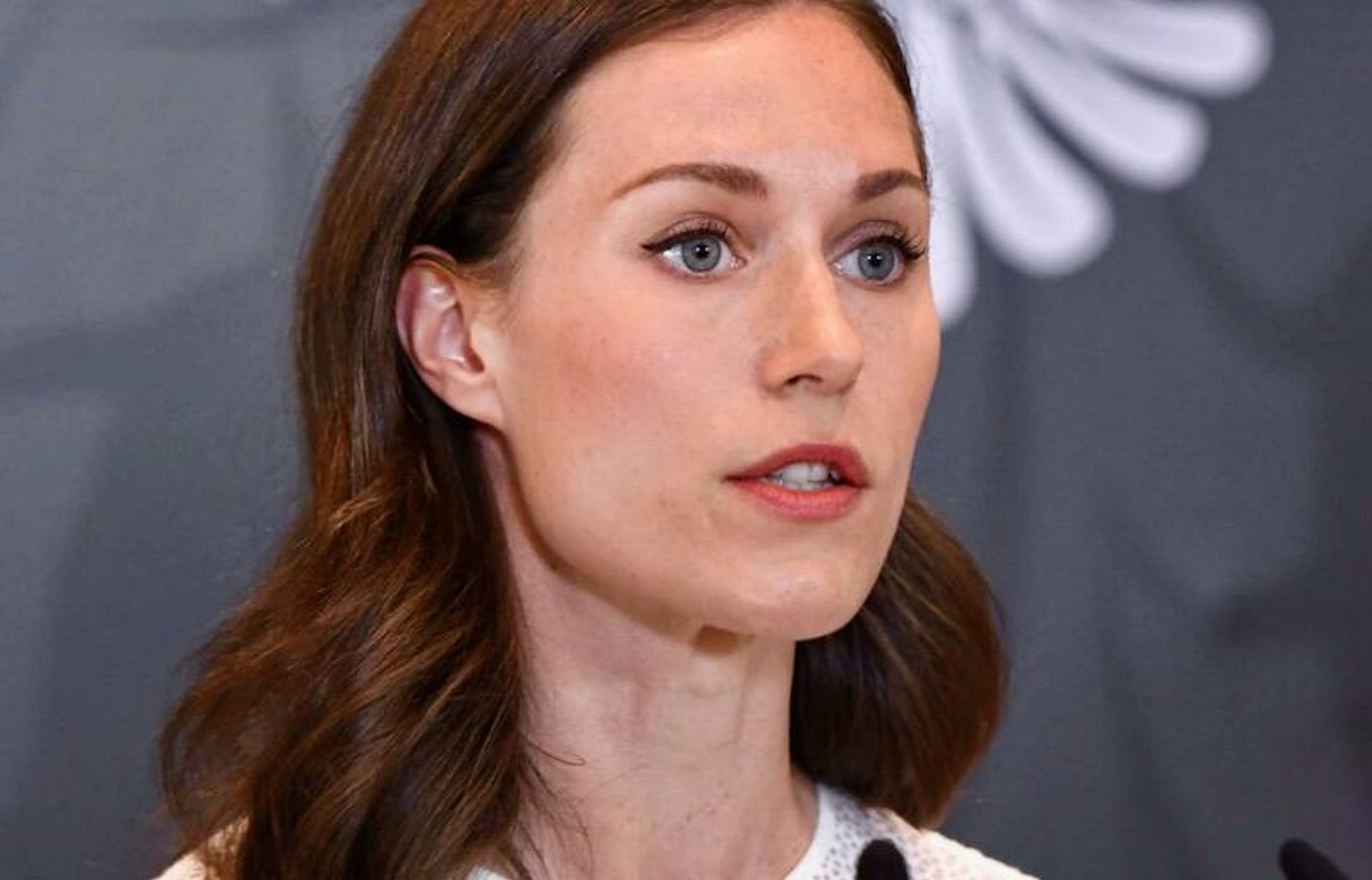


Since Sanna Marin became Finland's youngest prime minister in December 2019, the "child from a poor family" has risen to become the Nordic country's most popular leader of government in the 21st century.

But the 36-year-old's reputation as a firm crisis leader -- deftly navigating her small nation through the Covid pandemic and a historic NATO membership application -- has been challenged in the last few days.

Marin has become entangled in controversies over her partying, earning her the nickname "Party Sanna" in Finland's tabloid press.

A poll published by leading newspaper Helsingin Sanomat on Friday showed that 42 percent of Finns had a worse opinion of their prime minister due to the scandals.

A video leaked last week -- which made headlines around the world -- showed Marin dancing and partying with a group of friends and celebrities.

That controversy was quickly followed by another, when Marin was forced to apologise for a photo taken at her official residence of two women lifting their tops to bare their torsos, as she hosted friends after attending a music festival.

In December 2021, Marin came under sustained criticism after it was revealed she stayed out dancing until the early hours despite having been exposed to Covid-19.

Humble origins

"Some of the general public consider that partying like that and appearing in such company does not fit the norm for a politician," professor Anu Koivunen told AFP.

Koivunen noted that while the leaks would likely have caused a stir with any prime minister, she believes that the fact that Marin is a young female politician played a role in the ensuing brouhaha.

"There's been a debate about her qualifications, whether she's up to the job," Koivunen said, suggesting that this probably would not have been the case with a male prime minister.

But for her, this "ignores Marin's history as a crisis leader and a competent actor."

"I am human. And I too sometimes long for joy, light and fun amidst these dark clouds", Marin said this week in an emotional speech where she appeared close to tears.

Battling controversies about her lifestyle or stereotypes is nothing new for Marin.

She was relatively unknown before she became prime minister, her rise to power a swift one.

The slender, dark-haired Marin grew up in the southern Finnish town of Pirkkala, in a "rainbow, low-income family, and lived in the municipality's rental housing", in her own words.

"My parents divorced because of my father's drinking problem when I was only a few years old," she wrote in her blog.

Although Marin's childhood with her mother and mother's female partner did not include "material abundance", it was full of "love and ordinary life," she described.

'Shop girl'

Marin was the first in her family to go to university, earning a Masters degree in Administrative Sciences.

She supported her studies by working as a cashier, something which her opponents have later used to discredit her.

When Marin became prime minister, Finnish daily newspaper Iltalehti called it "a remarkable rise from shop cashier to the top of Finland."

Even Estonia's then interior minister Mart Helme caused a row by labelling Finland's new prime minister a "shop girl".

The negative comments prompted many prominent Finns to reveal on social media their own "rise to the top" from humble beginnings as cashiers or cleaners.

The comments and frequent controversies about her lifestyle and looks are in stark contrast with how the young politician got noticed and how she is now perceived, analysts say.

"As a politician, she is well respected. She is both firm and also open to discussion," Emilia Palonen, a political scientist at Helsinki University, told AFP.

Her Social Democratic party, the SDP, "needed strong, responsible and charismatic people like her", she said.

Marin was first elected as an MP in 2015. But for many Finns, the first time she entered the spotlight was in 2016 when a Tampere city council debate she chaired went viral on social media.

On the video which has racked up nearly a million views, Marin keeps a marathon debate on Tampere's new tram lines on track, despite it dragging on for more than five hours as representatives came up with ever more hilarious and absurd arguments for and against the tram.

Many praised her professionalism in the face of bickering councilmen, earning her a reputation as "a fearless leader".

"Sanna Marin showed how to keep the hecklers in check", Helsingin Sanomat daily wrote.

© 2022 AFP

Offline Rick Plant

  • Hero Member
  • *****
  • Posts: 8177
Re: Media Today
« Reply #349 on: August 29, 2022, 05:35:37 AM »
ROLLING STONES | ROCK OF AGES | Documentary | Charlie Watts Tribute

Rock of Ages: An unauthorised story on the Rolling Stones traces the personal ups and downs, professional twists and turns in the epic journey of the world’s most enduring rock band.

Cast: Mick Jagger, Charlie Watts, Keith Richards, Bill Wyman, Ronnie Wood. Brian Jones.

The Rolling Stones are an English rock band formed in London in 1962. Diverging from the pop rock of the early 1960s, the Rolling Stones pioneered the gritty, heavier-driven sound that came to define hard rock.

Their first stable line-up was vocalist Mick Jagger, multi-instrumentalist Brian Jones, guitarist Keith Richards, drummer Charlie Watts, and bassist Bill Wyman. During their formative years Brian Jones was the primary leader: he put the band together, named it, and drove the sound and look of the band. After Andrew Loog Oldham became the group's manager in 1963, he encouraged them to write their own songs.

Jagger and Richards became the primary creative force behind the band, alienating Jones, who developed a drug addiction that interfered with his ability to contribute meaningfully. He left the band shortly before his death in 1969, having been replaced by guitarist Mick Taylor, who in turn left in 1974 to be replaced by Ronnie Wood. From Wyman's departure in 1993 to Watts' death in 2021, the band continued as a four-piece core, with Darryl Jones playing bass on tour and on most studio recordings.

Watch: