But there's more, much more!
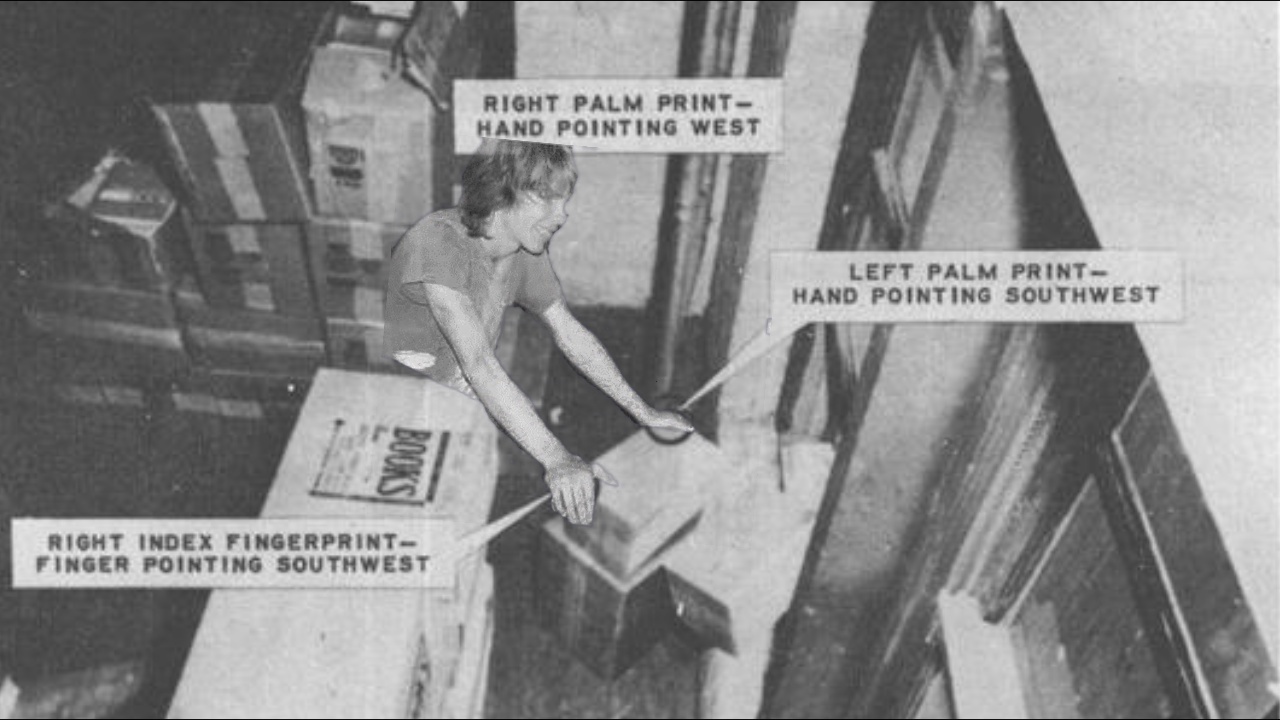
Oswald's prints were on top of the rifle rest Rolling Reader box orientated down Elm Street.
Latona did print tests and determined that detectable prints using powder lasted a maximum of 24 hours, bizarrely when pinned down he said 3 days, I'm guessing to be safe, but he still classified the prints as fresh.
Mr. LATONA. We have, run some tests, and usually a minimum of 24 hours on a material of this kind, depending upon how heavy the sweat was, to try to say within a 24-hour period would be a guess on my part.
Mr. EISENBERG. I am not sure I understand your reference to a minimum of 24 hours.
Mr. LATONA. We have conducted tests with various types of materials as to how long it could be before we would not develop a latent print.
Mr. EISENBERG. Yes?
Mr. LATONA. Assuming that the same print was left on an object or a series of similar prints were left on an object, and powdering them, say, at intervals of every 4 hours or so, we would fail to develop a latent print of that particular type on that particular surface, say, within a 24-hour period.
Mr. EISENBERG. So that is a maximum of 24 hours?
Mr. LATONA. That is right.
-----------------------------------------------
Under circumstances, bearing in mind that here the box was powdered, and a print was developed with powder, the conclusion is that this is comparatively a fresh print. Otherwise, it would not have developed.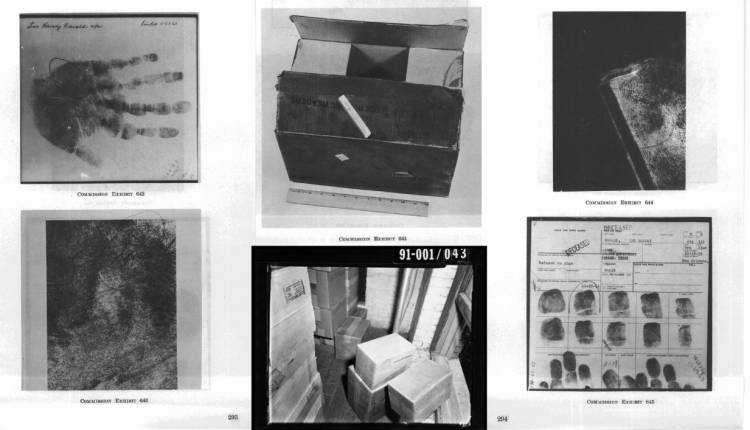
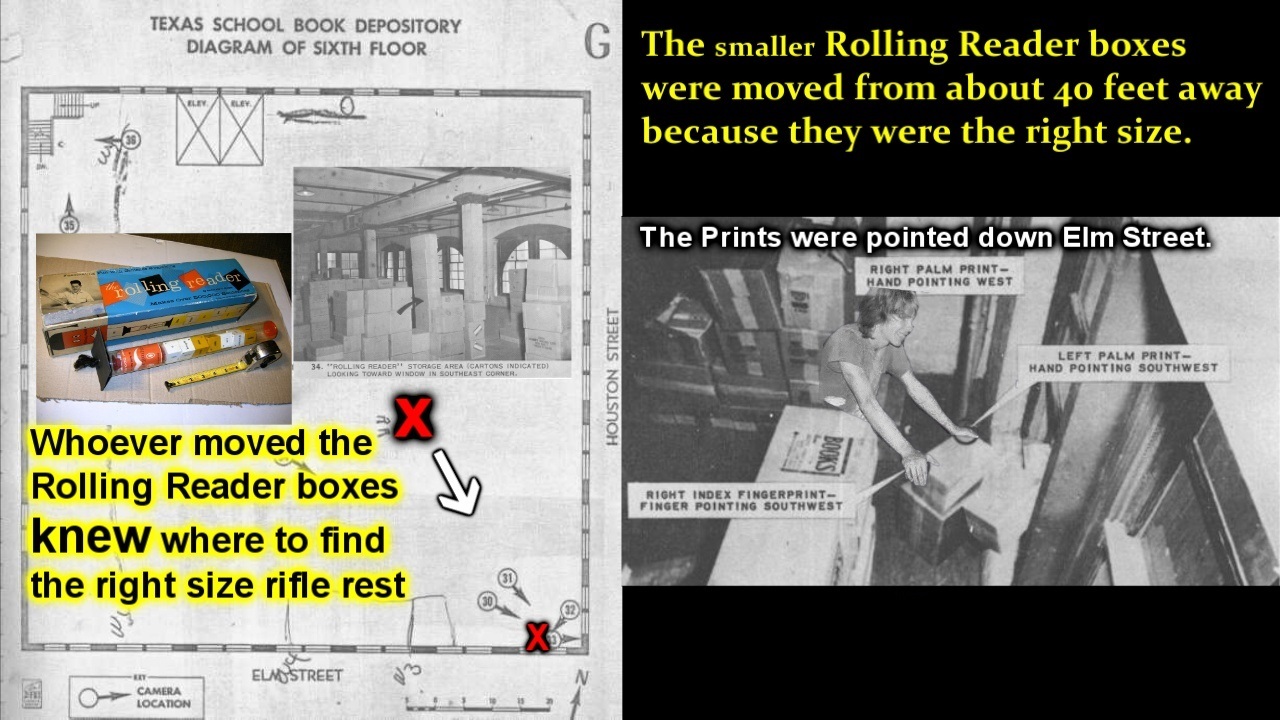
And to top it off these Rolling Reader boxes with the fresh prints and according to Oswald's supervisor, William Shelley, were moved halfway across the floor and it was very unusual to see them in south west corner, Oswald's sniper's nest. The boxes were smaller and were obviously moved to make a suitable height for Oswald's rifle!
Mr. BALL. You have seen pictures of the window, haven't you?
Mr. SHELLEY. Oh, yes.
Mr. BALL. With the larger box on the floor and two Rolling Readers on the top?
Mr. SHELLEY. Yes, sir.
Mr. BALL. One Rolling Reader resting in the sill of the window?
Mr. SHELLEY. Yes.
Mr. BALL. Now, the Rolling Readers were stacked three aisles away, I believe you testified, haven't you, before?
Mr. SHELLEY. I'm not sure how many aisles we moved all that stock now, but it was at least three aisles.
Mr. BALL. Away from the southeast corner?
Mr. SHELLEY. Yes; they were at least half way across the building from this corner.
Mr. BALL. Had you ever instructed anybody to take two Rolling Readers over there?
Mr. SHELLEY. No, sir.
Mr. BALL. Would it have been unusual for two Rolling Readers to be out of the stack and over there?
Mr. SHELLEY. Very unusual, because they are different size cartons from everything else.
Mr. BALL. You mean from everything else in the southeast corner?
Mr. SHELLEY. Well, from any box on that floor.
Mr. BALL. They were?
Mr. SHELLEY. Yes; they were little boxes. The rest of them are pretty good sized.
Mr. BALL. You had had a special place for the Rolling Readers?
Mr. SHELLEY. Yes, sir.
Mr. BALL. Then, the two Rolling Readers that were over in the southeast corner were out of place, were they?
Mr. SHELLEY. They sure were.
Mr. BALL. Had you ever seen them out of place before?
Mr. SHELLEY. No, sir.
Mr. BALL. Had you ever seen those Rolling Readers in that corner before?
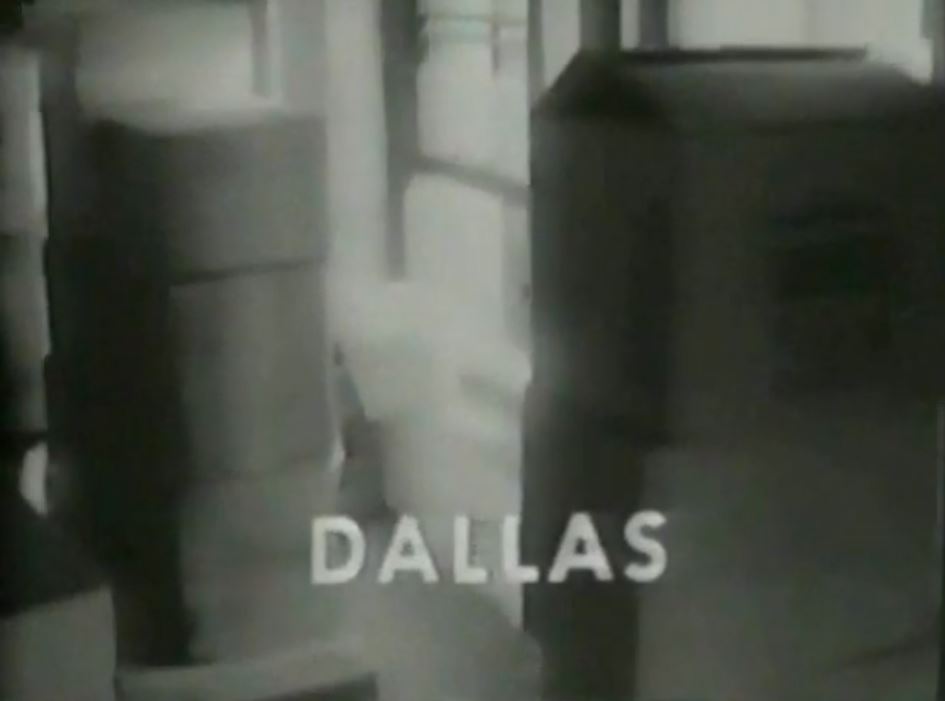
Mr. SHELLEY. No, sir.Tom Alyes captured the Sniper's nest before any boxes were moved, and we can see the rolling reader rifle rest boxes.
JohnM

