U.S. Politics

Users Currently Browsing This Topic:
Jarrett Smith

Author Topic: U.S. Politics  (Read 802590 times)

Offline Rick Plant

  • Hero Member
  • *****
  • Posts: 8177
Re: U.S. Politics
« Reply #630 on: May 23, 2022, 01:15:54 PM »
78,000 pounds of infant formula arrives in US

INDIANAPOLIS (AP) — A military plane carrying enough specialty infant formula for more than half a million baby bottles arrived Sunday in Indianapolis, the first of several flights expected from Europe aimed at relieving a shortage that has sent parents scrambling to find enough to feed their children.

President Joe Biden authorized the use of Air Force planes for the effort, dubbed “Operation Fly Formula,” because no commercial flights were available.

The formula weighed 78,000 pounds (35,380 kilograms), White House press secretary Karine Jean-Pierre told reporters aboard Air Force One as Biden flew from South Korea to Japan.

Agriculture Secretary Tom Vilsack was in Indianapolis to greet the arrival of the first shipment.

The flights are intended to provide “some incremental relief in the coming days” as the government works on a more lasting response to the shortage, Brian Deese, director of the White House National Economic Council, said Sunday.

Deese told CNN’s “State of the Union” that Sunday’s flight brought 15% of the specialty medical grade formula needed in the U.S., and because of various actions by the government, people should see “more formula in stores starting as early as this week.”

Longer term, he said, the U.S. needs more formula providers “so that no individual company has this much control over supply chains.”

Later Sunday, the White House announced the first two Defense Production Act authorizations for infant formula, both coming from the Department of Health and Human Services.

The manufacturer Abbott Nutrition can now receive priority orders of raw materials like sugar and corn syrup for infant formula, which the White House said will allow the manufacturer to increase production quickly by one-third. Reckitt, owner of Mead-Johnson, can now receive priority orders of consumables like filters and other single-use products necessary to generate certain oils needed to produce infant formula, the White House said, which will allow Reckitt facilities to operate at maximum capacity.

The White House has said 132 pallets of Nestle Health Science Alfamino Infant and Alfamino Junior formula was to leave Ramstein Air Base in Germany for the U.S. Another 114 pallets of Gerber Good Start Extensive HA formula were expected to arrive in the coming days. Altogether, about 1.5 million 8-ounce bottles of the three formulas, which are hypoallergenic for children with cow’s milk protein allergies, are expected to arrive this week.

Indianapolis was chosen because it is a Nestle distribution hub. The formula will be offloaded into FedEx semitractor-trailers and taken to a Nestle distribution center about a mile away where the company will do a standard quality control check before distributing the supplies to hospitals, pharmacies and doctor’s offices, according to an administration official on site.

In a statement Sunday, the White House said a Pentagon-sourced FedEx Express flight of Nestlé S.A. formula from Ramstein Air Base would be bound for a Nestle facility in Pennsylvania.

Nestle said that over the past few months it has worked “around the clock” to address the formula shortage and help meet demand.

“We have significantly increased the amount of our formulas available to consumers by ramping up production and accelerating general product availability to retailers and online, as well as through hospitals and home health care for those most vulnerable,” the company said in a release.

"At Nestle we are absolutely committed to doing everything we can to get parents and caregivers the formula they need so their children can thrive,” it added. “We prioritized these products because they serve a critical medical purpose as they are for children with cow’s milk protein allergies.”

Under “Operation Fly Formula,” the Department of Agriculture and the Department of Health and Human Services are authorized to request Department of Defense support to pick up overseas infant formula that meets U.S. health and safety standards, so it can get to store shelves faster, according to the USDA.

Alfamino is primarily available through hospitals and home health care companies that serve patients at home.

U.S. regulators and Abbott Nutrition hope to have its Michigan plant reopened next week, but it will take about two months before product is ready for delivery. The Food and Drug Administration this week eased importation requirements for baby formula to try to ease the supply crunch, which has left store shelves void of some brands and some retailers rationing supply for parents nervous about feeding their children.

THE ASSOCIATED PRESS

Offline Rick Plant

  • Hero Member
  • *****
  • Posts: 8177
Re: U.S. Politics
« Reply #631 on: May 23, 2022, 01:25:55 PM »
President Biden @POTUS

Folks, I’m excited to tell you that the first flight from Operation Fly Formula is loaded up with more than 70,000 pounds of infant formula and about to land in Indiana.

Our team is working around the clock to get safe formula to everyone who needs it.


I have an update on Operation Fly Formula. We have secured a second flight to transport Nestlé specialty infant formula to Pennsylvania.

The flight and trucking will take place in the coming days, and I will continue to keep you updated.

This evening, I announced our first two Defense Production Act authorizations for infant formula for Abbott Nutrition and Reckitt. This allows the two infant formula manufacturers to add legally binding language to their orders with suppliers that will give them priority.

Abbott can now receive priority orders of raw materials so they can quickly increase production by over one third where it stands today.
 
Reckitt can now receive priority orders of consumables like filters which will allow their facilities to operate at maximum capacity.

I will continue to identify additional opportunities to invoke the DPA and further increase infant formula production to maximum capacity.


https://twitter.com/POTUS/status/1528545284845977601

Offline Rick Plant

  • Hero Member
  • *****
  • Posts: 8177
Re: U.S. Politics
« Reply #632 on: May 23, 2022, 01:54:20 PM »
Biden: US would intervene with military to defend Taiwan

President Joe Biden says the U.S. would intervene militarily if China were to invade Taiwan

TOKYO -- President Joe Biden said Monday that the U.S. would intervene militarily if China were to invade Taiwan, saying the burden to protect Taiwan is "even stronger' after Russia's invasion of Ukraine. It was one of the most forceful presidential statements in support of self-governing in decades.

Biden, at a news conference in Tokyo, said “yes” when asked if he was willing to get involved militarily to defend Taiwan if China invaded. “That’s the commitment we made,” he added.

The U.S. traditionally has avoided making such an explicit security guarantee to Taiwan, with which it no longer has a mutual defense treaty, instead maintaining a policy of “strategic ambiguity" about how far it would be willing to go if China invaded. The 1979 Taiwan Relations Act, which has governed U.S. relations with the island, does not require the U.S. to step in militarily to defend Taiwan if China invades, but makes it American policy to ensure Taiwan has the resources to defend itself and to prevent any unilateral change of status in Taiwan by Beijing.

Biden's comments drew a sharp response from the mainland, which has claimed Taiwan to be a rogue province.

Chinese Foreign Ministry spokesperson Wang Wenbin expressed “strong dissatisfaction and resolute opposition" to Biden's comments. “China has no room for compromise or concessions on issues involving China’s core interests such as sovereignty and territorial integrity."

He added, "China will take firm action to safeguard its sovereignty and security interests, and we will do what we say.”

A White House official said Biden’s comments did not reflect a policy shift.

Speaking alongside Japanese Prime Minister Fumio Kishida, Biden said any effort by China to use force against Taiwan would “just not be appropriate,” adding that it “will dislocate the entire region and be another action similar to what happened in Ukraine.”

China has stepped up its military provocations against democratic Taiwan in recent years aimed at intimidating it into accepting Beijing's demands to unify with the communist mainland.

“They’re already flirting with danger right now by flying so close and all the maneuvers that are undertaken,” Biden said of China.

Under the “one China” policy, the U.S. recognizes Beijing as the government of China and doesn’t have diplomatic relations with Taiwan. However, the U.S. maintains unofficial contacts including a de facto embassy in Taipei, the capital, and supplies military equipment for the island’s defense.

Biden said it is his “expectation” that China would not try to seize Taiwan by force, but he said that assessment “depends upon just how strong the world makes clear that that kind of action is going to result in long-term disapprobation by the rest of the community."

He added that deterring China from attacking Taiwan was one reason why it's important that Russian President Vladimir Putin "pay a dear price for his barbarism in Ukraine," lest China and other nations get the idea that such action is acceptable.

Fearing escalation with nuclear-armed Russia, Biden quickly ruled out putting U.S. forces into direct conflict with Russia, but he has shipped billions of dollars in U.S. military assistance that has helped Ukraine put up a stiffer-than-expected resistance to Russia’s onslaught.

Taipei cheered Biden's remarks, with Ministry of Foreign Affairs spokesperson Joanne Ou expressing “sincere welcome and gratitude” for the comments.

“The challenge posed by China to the security of the Taiwan Strait has drawn great concern in the international community,” said Ou. “Taiwan will continue to improve its self-defense capabilities, and deepen cooperation with the United States and Japan and other like-minded countries to jointly defend the security of the Taiwan Strait and the rules-based international order, while promoting peace, stability and prosperity in the Indo-Pacific region.”

It's not the first time Biden has pledged to defend Taiwan against a Chinese attack, only for administration officials to later claim there had been no change to American policy. In a CNN town hall in October, Biden was asked about using the U.S. military to defend Taiwan and replied, “Yes, we have a commitment to do that."

Biden's comments came just before he formally launched a long-anticipated Indo-Pacific trade pact that excludes Taiwan.

White House national security adviser Jake Sullivan confirmed Sunday that Taiwan isn’t among the governments signed up for the Indo-Pacific Economic Framework, which is meant to allow the U.S. to work more closely with key Asian economies on issues like supply chains, digital trade, clean energy and anticorruption.

Inclusion of Taiwan would have irked China.

Sullivan said the U.S. wants to deepen its economic partnership with Taiwan on a one-to-one basis.

https://abcnews.go.com/Politics/wireStory/biden-us-intervene-military-defend-taiwan-84904398

Offline Rick Plant

  • Hero Member
  • *****
  • Posts: 8177
Re: U.S. Politics
« Reply #633 on: May 23, 2022, 02:04:56 PM »
Senate Republicans Want Your Cleaning Lady to Pay Income Tax, but Not FedEx

Dwindling revenues from corporate taxes are beggaring the Treasury, and the GOP doesn’t care.
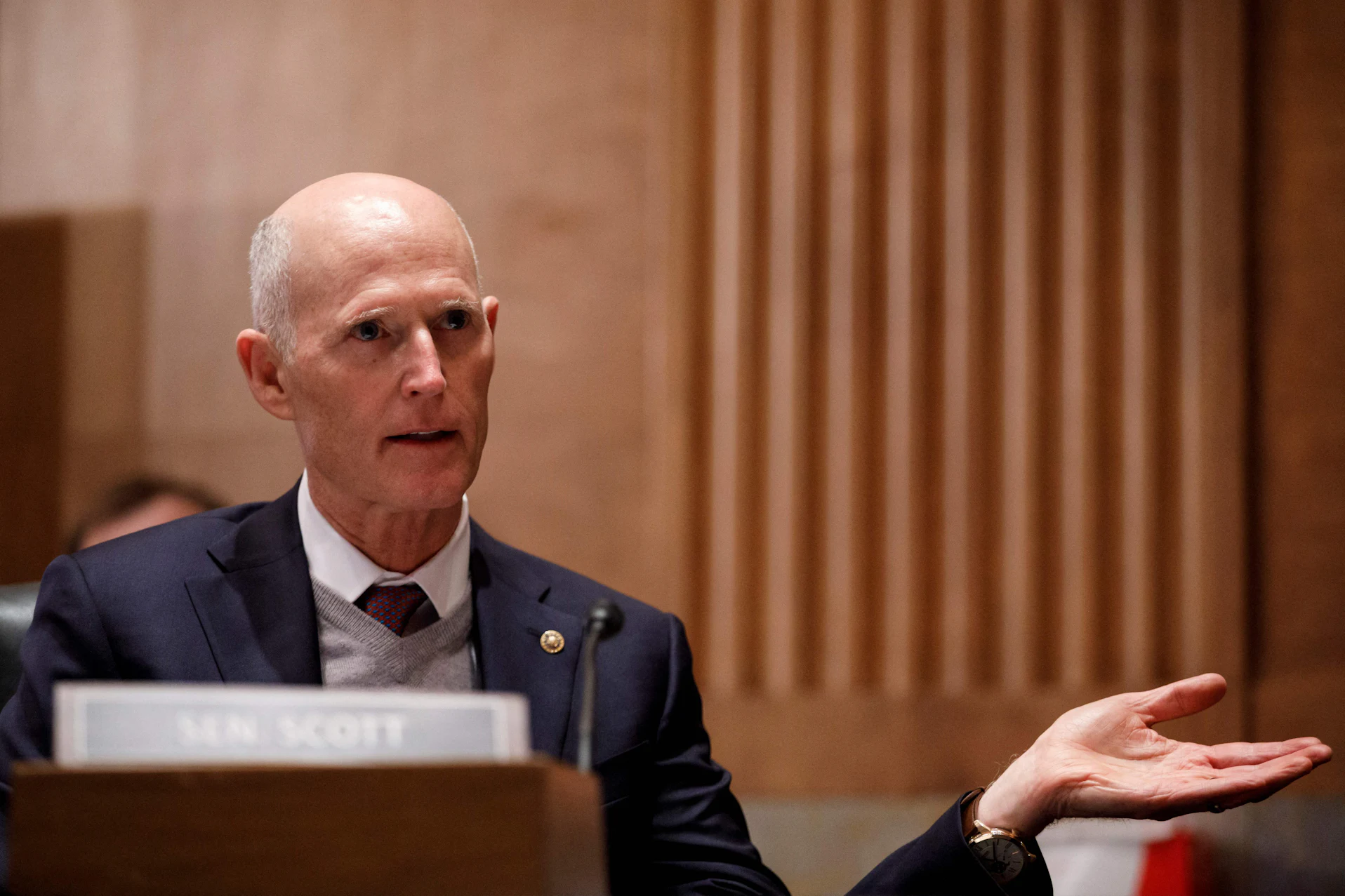


Treasury Secretary Janet Yellen traveled to Poland this week to urge support for a 15 percent global minimum tax on corporate income. These negotiations are slow going, but the Poles will be pushovers compared to the United States Senate. The same Senate Republicans who wish to impose a minimum income tax on people refuse to impose one on corporations.

“All Americans should pay some income tax,” says Senator Rick Scott of Florida, chairman of the National Republican Senatorial Committee, in his Rescue America plan. In practice, that means someone making, for example, $30,000 annually should pay the IRS more than $1,000 in income tax. A thousand bucks is an awful lot of money to someone living on $30,000 a year. But it’s necessary for this person to pay something, Scott insists, so that he or she will “have skin in the game.”

It’s a matter of behavioral conditioning—Pavlov’s dogs, B.F. Skinner’s box, that sort of thing. Without skin in the game, the editorial board of The Wall Street Journal explained 20 years ago (“The Non-Taxpaying Class”), people who are too poor to pay income tax become “that much more detached from recognizing the costs of government.” (Never mind that our friend making $30,000 already pays $2,295 annually in Federal Insurance Contributions Act tax to pay for Social Security and Medicare.) Instead, this person thinks of the government merely as an automated teller machine that spits out food stamps and welfare checks.

Should all American corporations pay income tax, Senator Scott? They don’t right now. A report by the nonprofit Institute on Taxation and Economic Policy that is cited a lot by President Joe Biden identified 55 large corporations, more than 10 percent of the S&P 500, that paid no income tax in 2020. These included FedEx, Nike, and Archer Daniels Midland. A report by the congressional Joint Committee on Taxation that sampled tax returns from 50 large corporations covering the years 2014 to 2018 found the percentage that paid no income tax was more like 20 percent.

Applying Scott’s logic, and that of the Journal’s editorial page, FedEx, Nike, and Archer Daniels Midland don’t have skin in the game. Ten to 20 percent of the biggest corporations in America have become “that much more detached from recognizing the costs of government.” Instead, they think of government merely as an automated teller machine that spits out accelerated depreciation schedules and opportunity zone tax credits.

Yet Scott and the Senate GOP’s Rescue America plan make no mention of President Joe Biden’s proposed minimum income tax on corporations; the Journal’s editorial page fervently opposes it; and various Senate Republicans pledged to oppose it, too. Senate Republican leader Mitch McConnell called it a “red line.”

The ranking members of the House Ways and Means Committee and the Senate Finance Committee, Representative Kevin Brady of Texas and Senator Mike Crapo of Idaho, wrote Yellen last June about the minimum corporate tax. “Other countries have shown that they will aggressively seek to gain market share and strip away our tax base,” they said. “The administration should not surrender jobs, growth, or tax revenues to other countries in order to advance a partisan tax increase agenda at home.”

That was grandstanding. As Brady and Crapo well know, the minimum corporate tax proposed by the Biden administration is a global minimum worked up by the Organization for Economic Cooperation and Development to halt an international arms race of tax cutting. A corporate minimum tax is necessary precisely because tax havens are slashing tax rates to attract U.S. corporations. In 2017, President Donald Trump entered this game of limbo by dropping the top corporate tax rate from 35 percent to 21 percent.

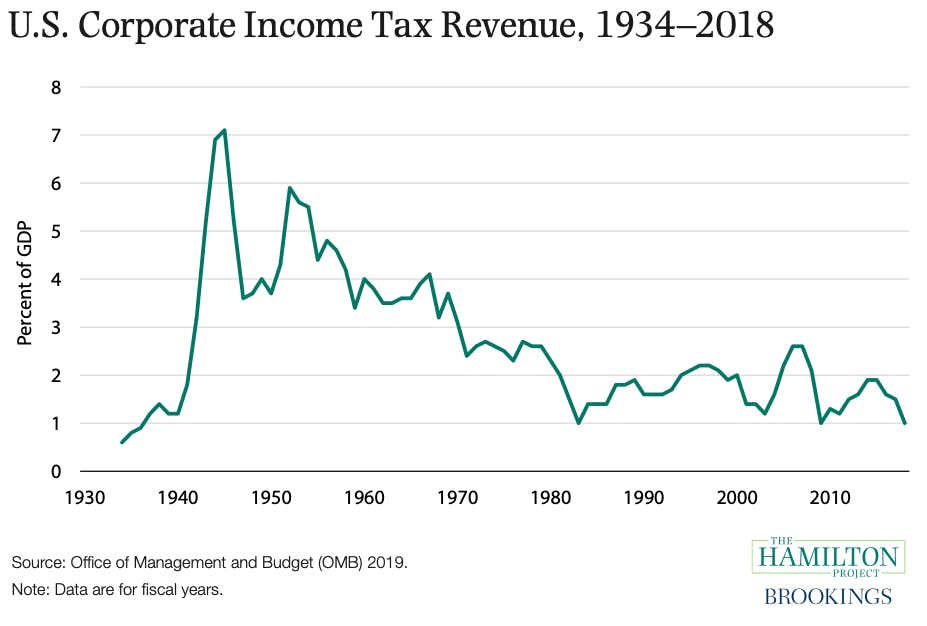
Before we proceed, allow me to share a couple of charts from a 2020 report by Harvard economist Jason Furman for the Brookings Institution’s Hamilton Project.

The first chart shows revenue from the U.S. corporate income tax since 1930 as a percentage of gross domestic product. Note its downward slope. Corporate taxes, Furman writes, “are less than half their historic average.”


The second chart compares tax revenue from U.S. corporations, as a share of GDP, to that in other advanced industrial democracies. Even before the 2017 tax cut, the effective corporate tax rate in the U.S. was, when you figured in various exemptions and deductions, about the same as in other comparable nations. But as a share of GDP, it wasn’t about the same; it was way behind—indeed, one up from dead last, just ahead of Latvia.
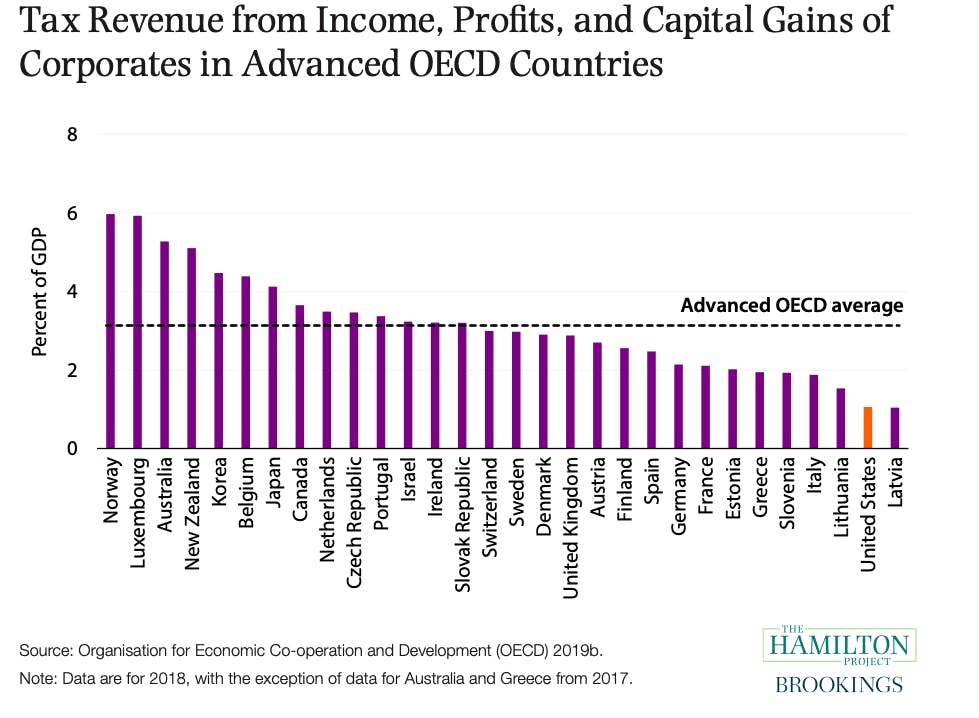


Don’t let anybody tell you corporate taxes are high in the U.S. By historic standards and by international standards they are very, very low. As Scott would say (but doesn’t), corporations don’t have a lot of skin in the game.

Unlike Scott’s anxieties about the working poor who don’t pay income tax, the shortfall of corporate tax revenue is not an abstract concern. Low corporate tax revenue is a major reason why the U.S. Treasury is starved for cash. In 2018, Furman observed, overall tax revenue for the federal government was, omitting cyclical downturns, at a 50-year low relative to GDP. And that was before Congress spent $4 trillion on Covid relief (most of it on a bipartisan basis).

There are two reasons for the downward trend in corporate revenue. One is that tax havens like Bermuda and the Cayman Islands have much lower tax rates (or, in the case of the Caymans, no corporate income tax at all). Hence the OECD proposal for a 15 percent minimum corporate income tax. As Yellen’s Poland trip shows, there remain some obstacles abroad to implementing the minimum tax. But after the G-7 nations endorsed it last year, 130 nations, representing more than 90 percent of global GDP, signed on, including, in principle, Poland. Even the Caymans signed on! Congressional Republicans, by contrast, won’t endorse an international minimum even in principle.

The second reason for the downward trend is that tax laws, both here and abroad, make it laughably easy for corporations to lower their tax bills by allocating profits to foreign tax havens. Before the Trump tax cut, this practice cost the Treasury more than $100 billion annually, according to congressional testimony last year by Kimberly Clausen, deputy assistant secretary for tax analysis at the Treasury Department. The loss was less after the Trump tax cut, but only because the U.S. corporate tax rate was lower.

The 2017 tax cut included a couple of provisions intended to reduce profit-shifting, including a tax on intellectual property and other “intangible income” when it’s assigned to other countries. But the 2017 law also included a couple of other provisions that made profit-shifting easier. The net result, Clausen observed in her testimony, was that the share of U.S. corporate income in the seven biggest tax havens (Bermuda, the Caymans, Ireland, Luxembourg, the Netherlands, Singapore, and Switzerland) remained about the same after the 2017 law was enacted.

The OECD plan would go after the profit-shifting problem more aggressively, in part by shifting tax jurisdictions to places where customers actually reside, which is mostly in wealthier nations with higher corporate tax rates. Because it’s more complicated, the details of the profit-shifting proposal are taking longer to produce. They will also be harder to implement, because they’ll require alterations to various existing international treaties.

In the U.S., that poses the biggest obstacle. At least in theory, the 15 percent minimum corporate tax can be folded into a reconciliation bill—it was included, for instance, in the Build Back Better bill—and therefore would require only 51 votes in the Senate. But the profit-shifting changes alter U.S. treaties and therefore require 67 votes in the Senate.

Don’t Republicans want corporations to pay their fair share? Not on your life. If anything, Republican opposition is hardening. “I certainly hope that the deal does not get implemented by the U.S.,” Crapo told Bloomberg reporter Laura Davison on Wednesday. “That would be a terrible mistake.” Corporations don’t want to pay a minimum income tax, and therefore Senate Republicans (and, to be fair, a few Democrats) don’t want to impose one. I doubt your cleaning lady wants to pay a minimum income tax, either. But as far as Senate Republicans are concerned, she’ll just have to suck it up.

https://newrepublic.com/article/166537/senate-republicans-corporate-taxes-dwindling

Offline Rick Plant

  • Hero Member
  • *****
  • Posts: 8177
Re: U.S. Politics
« Reply #634 on: May 23, 2022, 02:47:38 PM »
President Biden @POTUS

Today I toured the Air Operations Center’s Combat Operations Floor at Osan Air Base and met with the service members who represent the commitment U.S.-ROK have made to each other and the strength of our alliance.


Today, I had the great honor of meeting service members and military families at Osan Air Base. They represent the commitment our two countries made to each other and to the strength of the U.S.-ROK alliance


Thank you to the American troops at Osan Air Base. Thank you for what you do to defend our country and our ally, and for representing our country so very well.

And to the Korean forces, thank you for your service, and for having our backs just as we have yours.


https://twitter.com/POTUS/status/1528458275230040064

Offline Rick Plant

  • Hero Member
  • *****
  • Posts: 8177
Re: U.S. Politics
« Reply #635 on: May 24, 2022, 12:50:14 PM »
House ethics panel to investigate GOP Rep. Madison Cawthorn over cryptocurrency

The House Ethics Committee has voted unanimously to launch an investigation into Rep. Madison Cawthorn for his connection to an alleged cryptocurrency scam and a possible inappropriate relationship with a member of his staff.

The scandal-prone Cawthorn (R-NC), who lost his renomination bid earlier this month, has been accused of insider trading related to the Let's Go Brandon cryptocurrency, a Washington Examiner investigation revealed.

"Pursuant to the Committee’s action, the Investigative Subcommittee shall have jurisdiction to determine whether Representative Madison Cawthorn may have: improperly promoted a cryptocurrency in which he may have had an undisclosed financial interest, and engaged in an improper relationship with an individual employed on his congressional staff," the committee said in a press release.

Rep. Veronica Escobar (D-TX) will oversee the subcommittee, and the statement notes that an investigation is not a declaration of guilt.

Jordan Libowitz, the communications director for the watchdog group Citizens for Responsibility and Ethics in Washington, hailed the committee's decision to investigate Cawthorn's promotion and reported financial interest in the meme cryptocurrency but noted that the committee doesn't have much time to complete its inquiry following Cawthorn's primary defeat last week to North Carolina state Sen. Chuck Edwards.

"It's good that House Ethics will be investigating this, Libowitz told the Washington Examiner. "However, their jurisdiction is limited to Cawthorn's time in Congress, so we hope that they are able to complete their investigation before his term is up and they are forced to drop the matter."

Dylan Hedtler-Gaudette, the government affairs manager for the Project on Government Oversight, noted the significance of the committee's unanimous vote to launch an investigation into Cawthorn.

"There is substantial reason to believe that Rep. Cawthorn may have committed insider trading or some other manner of impropriety," Hedtler-Gaudette told the Washington Examiner. "The natural next step is an official investigation, and the findings of that investigation will be important to the effort to prevent this kind of misconduct in the future. The unanimous, bipartisan vote from the committee underscores the seriousness of these allegations, and that is encouraging from the standpoint of Congress wanting to get its house in order."

The announcement comes just weeks after Sen. Thom Tillis (R-NC) cited the Washington Examiner's reporting and called on the House Ethics Committee to investigate allegations that Cawthorn engaged in an insider trading scheme with LGBCoin.

Sen Thom Tillis - "Insider trading by a member of Congress is a serious betrayal of their oath, and Congressman Cawthorn owes North Carolinians an explanation. There needs to be a thorough and bipartisan inquiry into the matter by the House Ethics Committee."

Multiple government watchdog groups previously told the Washington Examiner that Cawthorn may have implicated himself in an insider trading scheme when he wrote: "LGB legends ... Tomorrow we go to the moon!" in response to a Dec. 29 Instagram picture of himself posing with the meme coin's ringleader, James Koutoulas.

The next day, Koutoulas was featured in a statement from NASCAR driver Brandon Brown announcing that the coin would be the primary sponsor of his 2022 season, causing the cryptocurrency's value to spike by 75%.

LGBCoin is a reference to the "Let's go Brandon" chant mocking President Joe Biden.

Koutoulas revealed in response to the Washington Examiner's reporting that Cawthorn last traded the coin three weeks before the announcement was made.

But Cawthorn has never filed any financial disclosures reporting his purchase of LGBCoin, which members of congress are required to do whenever they purchase more than $1,000 of any cryptocurrency.

Both Cawthorn and Koutoulas later said knowledge of LGBCoin's pending deal with Brown was all public knowledge in early December when the lawmaker reportedly traded the coin.

But neither Cawthorn nor Koutoulas were able to provide any records to the Washington Examiner showing that the deal was public knowledge in early December.

Craig Holman, a government affairs lobbyist for Public Citizen, previously told the Washington Examiner that Koutoulas's statement that Cawthorn traded the meme coin before it struck its deal with Brown strengthened his suspicions that Cawthorn had insider knowledge at the time of his trade.

"The new information that Madison Cawthorn did indeed buy up LGBCoin prior to the public announcement of the NASCAR endorsement adds greater evidence to the suspicions of Cawthorn violating the insider trading laws," Holman said. "If Cawthorn knew of the nonpublic material information that would radically boost the value of the cryptocurrency, and purchased LGBCoin with that knowledge, this would likely constitute insider trading."

https://www.washingtonexaminer.com/news/house-ethics-panel-to-investigate-gop-rep-madison-cawthorn-over-cryptocurrency

Offline Rick Plant

  • Hero Member
  • *****
  • Posts: 8177
Re: U.S. Politics
« Reply #636 on: May 24, 2022, 12:57:20 PM »
Court upholds the block on Florida's social media 'censorship' law

The 11th Circuit court found that social media companies "are 'private actors' whose rights the First Amendment protects."


Gov. Ron DeSantis signed Florida's social media bill into law last year, before it was almost immediately blocked.

As the Supreme Court weighs whether to block Texas' social media "censorship" law, a court of appeals has decided to uphold the injunction on a similar Florida law, finding that social media companies "are 'private actors' whose rights the First Amendment protects."

The 11th Circuit ruling comes in response to a lawsuit brought by NetChoice and CCIA, the same trade groups who filed an emergency application with Supreme Court Justice Samuel Alito after a similar Texas social media law went into effect earlier this month. The court found that Florida's argument that social media giants are not entitled to First Amendment rights doesn't hold up.

"Not in their wildest dreams could anyone in the Founding generation have imagined Facebook, Twitter, YouTube, or TikTok," the court wrote in its opinion. "But 'whatever the challenges of applying the Constitution to ever-advancing technology, the basic principles of freedom of speech and the press, like the First Amendment’s command, do not vary when a new and different medium for communication appears.'”

The opinion stands in stark contrast to the Fifth Circuit's decision to lift an injunction on Texas' law earlier this month without so much as a sentence of explanation. That decision created potentially catastrophic consequences for the tech industry, leading NetChoice and CCIA to file an emergency application asking the Supreme Court to stay the Fifth Circuit's decision. The Supreme Court has yet to issue its decision, which could come any day now.

The 11th Circuit's decision on the Florida law upheld an injunction on parts of the law that would prohibit companies from "deplatforming" political candidates, prioritizing or deprioritizing posts "by or about" political candidates and removing any content by a "journalistic enterprise." It also blocks provisions that require companies to provide a “thorough rationale” for every content moderation decision.

But the court did allow the other disclosure provisions in the law — which includes having clear content standards and allowing users to access their data — to stand, finding that they are "far less burdensome" and unlikely to violate the First Amendment.

Whatever the Supreme Court decides with regard to the emergency application in Texas, the Florida decision tees up a possible circuit split in the event that the Texas law, which is still awaiting appeal, is upheld. That could create an opportunity for the Supreme Court to decide once and for all whether social media platforms enjoy First Amendment rights or whether they should be, as Justice Clarence Thomas has suggested, considered common carriers of a new age.

The tech groups behind both lawsuits were encouraged by the Florida decision and what it could mean for the Supreme Court's forthcoming decision. “The First Amendment protects platforms and their right to moderate content as they see fit—and the government can’t force them to host content they don’t want," NetChoice Vice President Carl Szabo said in a statement. “This makes it even more likely that the US Supreme Court will overturn the 5th Circuit’s split decision on the similar Texas law.”

https://www.protocol.com/bulletins/florida-social-media-law-block