JFK: Trump, Russians, Cuban Missile Crisis

Users Currently Browsing This Topic:
0 Members

Author Topic: JFK: Trump, Russians, Cuban Missile Crisis  (Read 21695 times)

Offline Thomas Graves

  • Hero Member
  • *****
  • Posts: 2692
Re: JFK: Trump, Russians, Cuban Missile Crisis
« Reply #7 on: July 16, 2020, 05:13:37 PM »
.

Rick Plant wrote:

"Some people believe that former government officials had Russian connections, so Benedict Donald [sic] isn't the only one with allegiance to Mother Russia."
...

Dear Frederick,

What former government officials?

Although Roger "Ratxxxxxx" Stone (with help from Harley Schlanger of the fascistic pro-Russia Lyndon LaRouche organization) probably helped Vladimir Putin, Julian Assange and Donald Trump coordinate the dumpings of the stolen-by-Russia DNC emails during the 2016 campaign, he officially quit it in August of 2015 and never did become a "government official".

Are you speaking of Michael Flynn?

Who else?

--  MWT  ;)
« Last Edit: July 16, 2020, 06:01:28 PM by Thomas Graves »

Offline Rick Plant

  • Hero Member
  • *****
  • Posts: 8177
Re: JFK: Trump, Russians, Cuban Missile Crisis
« Reply #8 on: July 17, 2020, 01:03:01 PM »
Lee Harvey Oswald called Russia's KGB department in charge of 'sabotage and assassination' before killing JFK

The CIA intercepted a phone call from Lee Harvey Oswald to the KGB's department in charge of "sabotage and assassination" before Oswald murdered John F. Kennedy.

Oswald had tried to defect to the Soviet Union years earlier but was denied citizenship.

The CIA did not conclude that Oswald killed Kennedy on the KGB's instructions.

https://www.businessinsider.com/lee-harvey-oswald-called-kgb-agent-before-jfk-assassination-2017-10

Offline Rick Plant

  • Hero Member
  • *****
  • Posts: 8177
Re: JFK: Trump, Russians, Cuban Missile Crisis
« Reply #9 on: July 17, 2020, 01:05:28 PM »

Offline Rick Plant

  • Hero Member
  • *****
  • Posts: 8177
Re: JFK: Trump, Russians, Cuban Missile Crisis
« Reply #10 on: July 18, 2020, 10:47:00 AM »
Lee Harvey Oswald and the Soviet Union: What the JFK Files Reveal
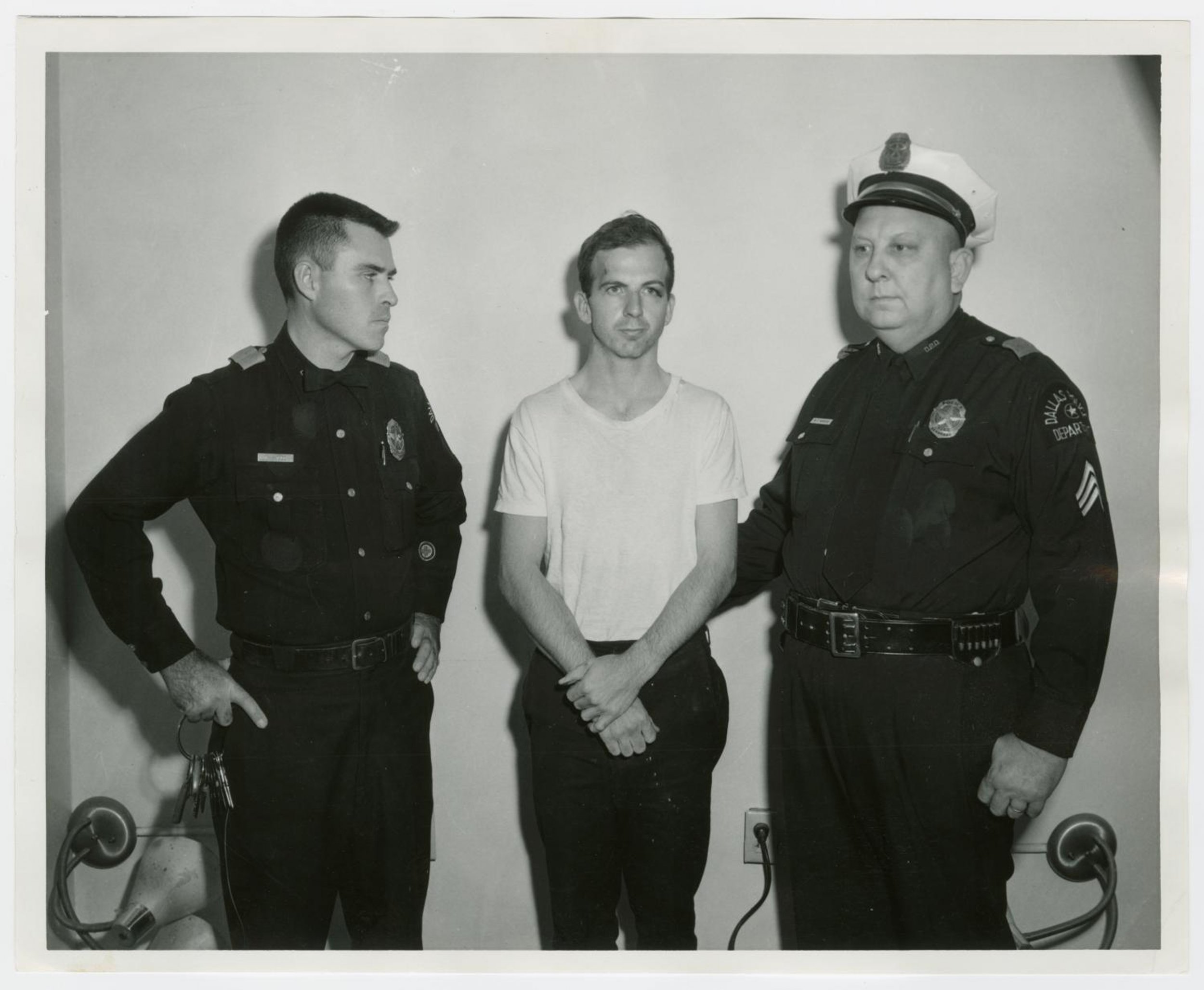

Lee Harvey Oswald with Dallas police on November 22, 1963, following the assassination of President John F. Kennedy.
DALLAS POLICE DEPARTMENT/DALLAS MUNICIPAL ARCHIVES/UNIVERSITY OF NORTH TEXAS/HANDOUT /REUTERS


Weeks before President John F. Kennedy's murder, Lee Harvey Oswald, the man who killed him, met with a Soviet assassination agent, newly released documents show. Though the official account of Kennedy's killing considers Oswald the sole perpetrator, several conspiracy theories exist, including the idea that the assassination was a Soviet plot.

Among the 2,891 items declassified by the U.S. government in Thursday's release are details about Oswald's links with the Soviet Union and what Moscow thought of him. Several documents due to be released remain classified on the orders of President Donald Trump after U.S. agencies, including the FBI and CIA, raised "national security, law enforcement and foreign affairs concerns."

However, what is now available from the documents shows that Oswald did meet a Soviet agent, that the U.S. was keeping tabs on him and that Moscow raised questioned about Oswald's mental state. The revelations are among the most interesting insights into the information that the FBI and CIA had at the time about Oswald's relationship with the Soviet Union.

Here are some of new findings, described in several of the newly declassified U.S. documents:

Oswald Meets With KGB Agent

Almost two months before Kennedy was fatally shot, Oswald visited the Soviet Embassy in Mexico City, where he spoke with the consul there, Valeriy Vladimirovich Kostikov, according to a CIA memo that reported an intercepted phone call made by Oswald.

The meeting took place on September 28, 1963, and the CIA documented it when intercepting a call Oswald made to the Soviet Embassy on October 1, mentioning his visit. During the phone conversation between Oswald and a guard who answered the phone, Oswald asked in "broken Russian" if there was "anything new concerning the telegram to Washington." The memo did not expand on the significance of the telegram, but FBI documents dated after Oswald's death refer to him sending a letter to a Russian diplomat in Washington.

This, an FBI liaison told the CIA, was possibly linked to Oswald's desire to obtain Soviet support on a "U.S. passport or visa-matter."

According to the memo, Kostikov was not only head of the consular section but also "an identified KGB officer" where he served in Department 13—a unit "responsible for sabotage and assassination."

Oswald Calls Cuba and Writes to the Soviets

Immediately after Oswald was shot dead, two days after Kennedy's assassination, FBI chief J. Edgar Hoover was adamant that the U.S. public had to believe that Oswald was "the real assassin" and that he was a lone actor.

In the same FBI memo reporting Hoover's comments, dated November 24, 1963, he said that Oswald's killing was "inexcusable" and that if the case raised suspicions of conspiracy concerning Oswald's allegiance, it had "several aspects which would complicate our foreign relations."

Hoover referred to Oswald's contact with Cuba and the Soviet Union, believing that revealing it could jeopardize U.S. diplomacy. Hoover suggested an investigative report, which the president could later decide whether or not to make public.
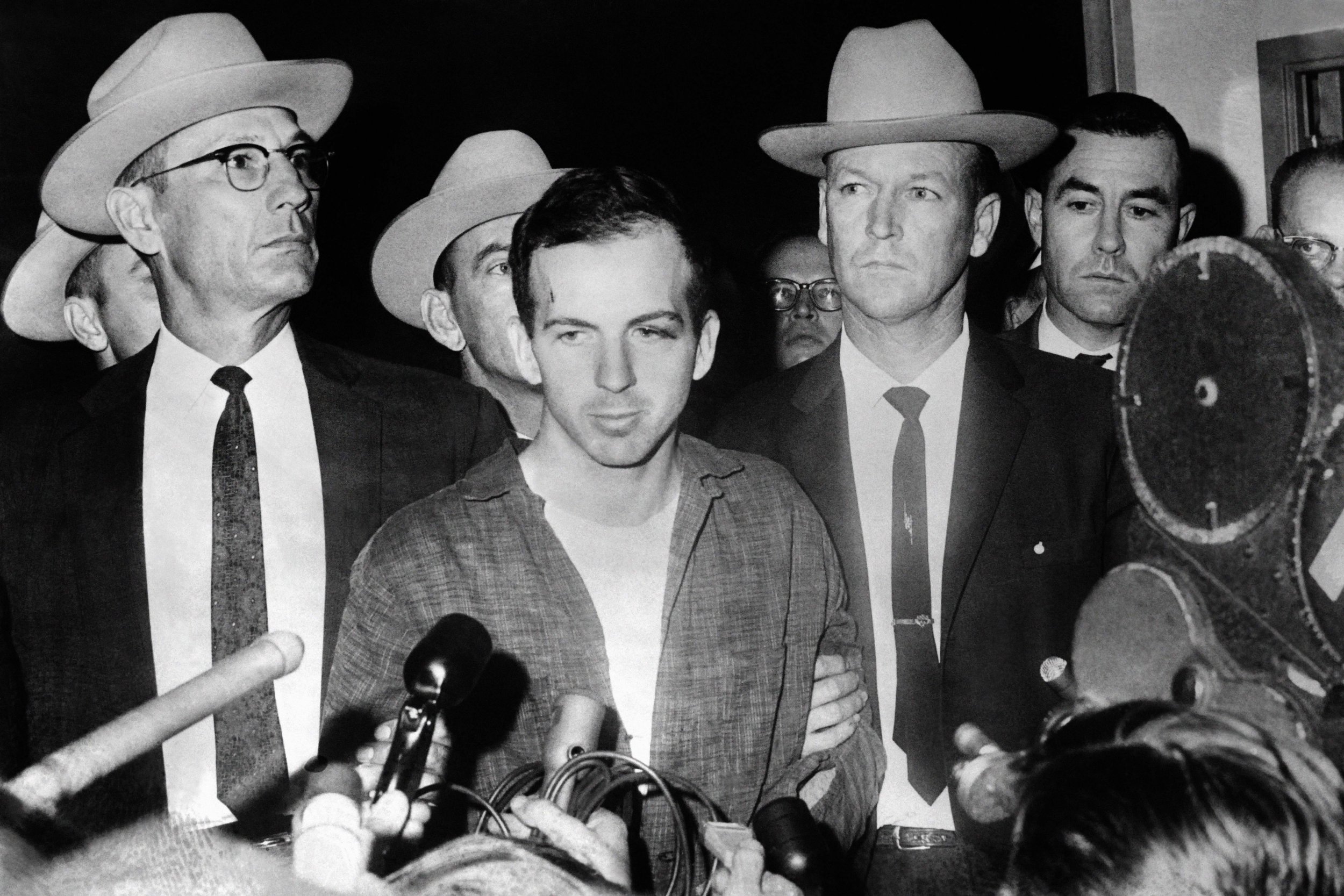

Lee Harvey Oswald during a press conference after his arrest in Dallas on November 22, 1963. Thousands of documents about the John F. Kennedy assassination, previously unseen by the public, have just been released.
STRINGER/AFP/GETTY IMAGES


Oswald had phoned the Cuban Embassy in Mexico City about a visa—a conversation that U.S. authorities had intercepted. "He also wrote a letter to the Soviet Embassy here in Washington, which we intercepted, read and resealed," Hoover wrote. "This letter referred to the fact that the FBI had questioned his activities on The Fair Play for Cuba Committee and also asked about the extension of his wife's visa." The FPCC was a Marxist group that supported the Cuban revolution.

Possibly referring to Oswald's contact with Kostikov, Hoover noted that the letter was "addressed to the man in the Soviet Embassy who is in charge of assassinations and similar such activities." Should this information come out as public information, it would "muddy the waters internationally," Hoover concluded.

The FBI chief did not make clear if he thought there was a cover-up conspiracy or if the case was simply liable to give such an impression falsely.

Oswald Disowned by Alarmed Moscow

After Kennedy's assassination, officials in Russia's ruling Communist Party expressed concern that with a shaken leadership in the U.S., "some irresponsible general" could take advantage of the situation and shoot a missile at the Soviet Union, an FBI memo states.

One source told the FBI that the Soviets considered the assassination to be a coup attempt, part of a "well-organized conspiracy on the part of the 'ultraright' in the United States," and believed it was not the action of a single person but a "carefully planned campaign." The memo notes that Russia rang church bells in Kennedy's honor, and the source emphasized that Soviet officials were confident Oswald "had no connection whatsoever with the Soviet Union."

"They [the Soviet source] described him as a neurotic maniac who was disloyal to his own country and everything else. They noted that Oswald never belonged to any organization in the Soviet Union and was never given Soviet citizenship," the memo states.

Yuri Nosenko, an alleged Soviet defector, said Oswald "expressed a wish to defect" shortly after arriving in Russia in 1959, but the KGB turned him down on the grounds that he was "mentally unstable." Oswald was then hospitalized after he was found with a slit wrist in his hotel room. The KGB's opinion of him and his wife, Marina, whom the agency described as "a woman of little intelligence," remained overtly negative.

Nosenko has been viewed by some as a possible KGB plant, posing as a defector, who claimed Moscow was innocent of any involvement in the assassination.

Citing a "reliable" source, the memo also claimed Soviet envoy to the U.N., Nikolai Fedorenko, underscored that the Kremlin "preferred to have had President Kennedy at the helm of the American Government."

https://www.newsweek.com/lee-harvey-oswald-and-soviet-union-what-jfk-files-reveal-694441

Offline Thomas Graves

  • Hero Member
  • *****
  • Posts: 2692
Re: JFK: Trump, Russians, Cuban Missile Crisis
« Reply #11 on: July 18, 2020, 05:04:23 PM »
Lee Harvey Oswald and the Soviet Union: What the JFK Files Reveal


Lee Harvey Oswald with Dallas police on November 22, 1963, following the assassination of President John F. Kennedy.
DALLAS POLICE DEPARTMENT/DALLAS MUNICIPAL ARCHIVES/UNIVERSITY OF NORTH TEXAS/HANDOUT /REUTERS


Weeks before President John F. Kennedy's murder, Lee Harvey Oswald, the man who killed him, met with a Soviet assassination agent, newly released documents show. Though the official account of Kennedy's killing considers Oswald the sole perpetrator, several conspiracy theories exist, including the idea that the assassination was a Soviet plot.

Among the 2,891 items declassified by the U.S. government in Thursday's release are details about Oswald's links with the Soviet Union and what Moscow thought of him. Several documents due to be released remain classified on the orders of President Donald Trump after U.S. agencies, including the FBI and CIA, raised "national security, law enforcement and foreign affairs concerns."

However, what is now available from the documents shows that Oswald did meet a Soviet agent, that the U.S. was keeping tabs on him and that Moscow raised questioned about Oswald's mental state. The revelations are among the most interesting insights into the information that the FBI and CIA had at the time about Oswald's relationship with the Soviet Union.

Here are some of new findings, described in several of the newly declassified U.S. documents:

Oswald Meets With KGB Agent

Almost two months before Kennedy was fatally shot, Oswald visited the Soviet Embassy in Mexico City, where he spoke with the consul there, Valeriy Vladimirovich Kostikov, according to a CIA memo that reported an intercepted phone call made by Oswald.

The meeting took place on September 28, 1963, and the CIA documented it when intercepting a call Oswald made to the Soviet Embassy on October 1, mentioning his visit. During the phone conversation between Oswald and a guard who answered the phone, Oswald asked in "broken Russian" if there was "anything new concerning the telegram to Washington." The memo did not expand on the significance of the telegram, but FBI documents dated after Oswald's death refer to him sending a letter to a Russian diplomat in Washington.

This, an FBI liaison told the CIA, was possibly linked to Oswald's desire to obtain Soviet support on a "U.S. passport or visa-matter."

According to the memo, Kostikov was not only head of the consular section but also "an identified KGB officer" where he served in Department 13—a unit "responsible for sabotage and assassination."

Oswald Calls Cuba and Writes to the Soviets

Immediately after Oswald was shot dead, two days after Kennedy's assassination, FBI chief J. Edgar Hoover was adamant that the U.S. public had to believe that Oswald was "the real assassin" and that he was a lone actor.

In the same FBI memo reporting Hoover's comments, dated November 24, 1963, he said that Oswald's killing was "inexcusable" and that if the case raised suspicions of conspiracy concerning Oswald's allegiance, it had "several aspects which would complicate our foreign relations."

Hoover referred to Oswald's contact with Cuba and the Soviet Union, believing that revealing it could jeopardize U.S. diplomacy. Hoover suggested an investigative report, which the president could later decide whether or not to make public.


Lee Harvey Oswald during a press conference after his arrest in Dallas on November 22, 1963. Thousands of documents about the John F. Kennedy assassination, previously unseen by the public, have just been released.
STRINGER/AFP/GETTY IMAGES


Oswald had phoned the Cuban Embassy in Mexico City about a visa—a conversation that U.S. authorities had intercepted. "He also wrote a letter to the Soviet Embassy here in Washington, which we intercepted, read and resealed," Hoover wrote. "This letter referred to the fact that the FBI had questioned his activities on The Fair Play for Cuba Committee and also asked about the extension of his wife's visa." The FPCC was a Marxist group that supported the Cuban revolution.

Possibly referring to Oswald's contact with Kostikov, Hoover noted that the letter was "addressed to the man in the Soviet Embassy who is in charge of assassinations and similar such activities." Should this information come out as public information, it would "muddy the waters internationally," Hoover concluded.

The FBI chief did not make clear if he thought there was a cover-up conspiracy or if the case was simply liable to give such an impression falsely.

Oswald Disowned by Alarmed Moscow

After Kennedy's assassination, officials in Russia's ruling Communist Party expressed concern that with a shaken leadership in the U.S., "some irresponsible general" could take advantage of the situation and shoot a missile at the Soviet Union, an FBI memo states.

One source told the FBI that the Soviets considered the assassination to be a coup attempt, part of a "well-organized conspiracy on the part of the 'ultraright' in the United States," and believed it was not the action of a single person but a "carefully planned campaign." The memo notes that Russia rang church bells in Kennedy's honor, and the source emphasized that Soviet officials were confident Oswald "had no connection whatsoever with the Soviet Union."

"They [the Soviet source] described him as a neurotic maniac who was disloyal to his own country and everything else. They noted that Oswald never belonged to any organization in the Soviet Union and was never given Soviet citizenship," the memo states.

Yuri Nosenko, an alleged Soviet defector, said Oswald "expressed a wish to defect" shortly after arriving in Russia in 1959, but the KGB turned him down on the grounds that he was "mentally unstable." Oswald was then hospitalized after he was found with a slit wrist in his hotel room. The KGB's opinion of him and his wife, Marina, whom the agency described as "a woman of little intelligence," remained overtly negative.

Nosenko has been viewed by some as a possible KGB plant, posing as a defector, who claimed Moscow was innocent of any involvement in the assassination.

Citing a "reliable" source, the memo also claimed Soviet envoy to the U.N., Nikolai Fedorenko, underscored that the Kremlin "preferred to have had President Kennedy at the helm of the American Government."

https://www.newsweek.com/lee-harvey-oswald-and-soviet-union-what-jfk-files-reveal-694441

It's probable that Oswald either didn't go to Mexico City, or if he did, neither made the phone calls talked about in the article, nor visited the Cuban Consulate and the Soviet Consulate in the manner he is alleged to have done.

KGB-loyal triple-agent Aleksey Kulak (FEDORA), ostensibly spying for gullible J. Edgar Hoover ever since he implausibly walked into the NYC office in broad daylight in 1962, was instrumental in making KGB officer Kostikov's name "Department 13-radioactive" a couple of months before "Oswald," speaking poor Russian and poor ENGLISH, spoke over a sure-to-be-tapped-by-CIA phoneline with the Soviet Embassy "security guard,"  KGB-loyal triple-agent Ivan Obyedkov, who "volunteered" to him the by-now (but only temporarily!) radioactive name "Kostikov," on Tuesday, October 1, 1963, effectively placing a Kremlin-protecting "World War Three Virus" in Oswald's CIA file.

--  MWT  ;)

PS  Yuri Nosenko was a false defector, as even John Newman and Peter Dale Scott now acknowledge.

PPS  In light of the above, Rusophile Ruthie's actions and rather obvious prevarications regarding the (ostensibly self-incriminating) "Comrade Kostin" letter must be reevaluated, imho, as possibly being the final (and crucial) element of the aforementioned WW III Virus.
« Last Edit: July 18, 2020, 05:31:21 PM by Thomas Graves »

Offline Rick Plant

  • Hero Member
  • *****
  • Posts: 8177
Re: JFK: Trump, Russians, Cuban Missile Crisis
« Reply #12 on: July 27, 2020, 02:44:03 PM »
Germany has rejected Trump's bid to bring Russia back into the G7
https://www.businessinsider.com/germany-rejects-trumps-call-re-admit-russia-to-the-g7-2020-7

Offline Rick Plant

  • Hero Member
  • *****
  • Posts: 8177
Re: JFK: Trump, Russians, Cuban Missile Crisis
« Reply #13 on: July 28, 2020, 05:35:18 AM »
Lying Trump

Trump is the promise everything, deliver nothing President. He also thinks it's "really ridiculous, illegal, and, of course, very unfair!" that we can make #LyingTrump trend #1

#EndTheNightmare