Welcome, Guest. Please login or register.

Author Topic: Trump supporters and conspiracy theory - Part 2  (Read 1112065 times)

Offline Rick Plant

  • Hero Member
  • *****
  • Posts: 8177
Re: Trump supporters and conspiracy theory - Part 2
« Reply #4466 on: December 22, 2021, 11:40:58 AM »
Crisis of Command: The Pentagon, The President, and January 6 (Part II)


Miller and Milley on watch against Trump using “the powers of the military to stay in office”

While Milley reportedly had reservations about the new acting Secretary of Defense, Miller later told Jonathan Karl that his priorities in taking the role were three: “no military coup, no major war, and no troops in the streets.” Milley had a similar aim: in their account of the final days of the Trump Presidency in the book I Alone Can Fix It, Washington Post journalists Carol Leonnig and Philip Rucker recount that Milley saw his role as one to “protect against Trump and his people manipulating the military,” and that he told “confidants he would never openly defy the president; that would be illegal and violate his own sense of duty.” He sought to get out ahead of any move by Trump or his loyalists to “use the powers of the FBI, the CIA and especially the military to stay in office.”

In the fall, Milley had written to assure lawmakers, “In the event of a dispute over some aspect of the elections, by law U.S. courts and the U.S. Congress are required to resolve any disputes, not the U.S. military.” The U.S. Army’s after-action report for Jan. 6 states that the Chairman was prompted to make this public declaration due to “concerns related to the role of the military in the transition of government after the November election.” Following the election and concerns raised by the new leadership at the Defense Department, Chairman Milley, standing alongside the new acting secretary of defense, made a point to restate the military’s constitutional role. “We do not take an oath to an individual. No, we do not take an oath to a country, a tribe or religion. We take an oath to the Constitution. And every soldier that is represented in this museum, every sailor, airman, Marine, Coast Guardsman, each of us will protect and defend that document, regardless of personal price,” Milley said during remarks at the opening of the US Army museum on Nov. 11.

When Trump issued a Dec. 19th call to action to his supporters to protest the certification of the Electoral College vote at the Capitol on Jan. 6, “Milley told his staff that he believed Trump was stoking unrest, possibly in hopes of an excuse to invoke the Insurrection Act and call out the military,” according to Leonnig and Rucker. Milley also shared these concerns with some trusted associates. According to Susan Glasser’s reporting, Milley specifically said he was concerned about a scenario in which Trump tried “to use the military on the streets of America to prevent the legitimate, peaceful transfer of power.” His associates were reportedly concerned too. On Jan. 2, a former defense secretary reportedly told Milley that “all ten living former secretaries of defense had reached the same conclusion.”

The following day, on Jan. 3, those former officials — including Ashton Carter, Dick Cheney, William Cohen, Mark Esper, Robert Gates, Chuck Hagel, James Mattis, Leon Panetta, William Perry and Donald Rumsfeld – published an op-ed in the Washington Post titled, “Involving the military in election disputes would cross into dangerous territory.” Noting the “solemn obligations of the U.S. armed forces and Defense Department,” the former secretaries wrote that “acting defense secretary Christopher C. Miller and his subordinates — political appointees, officers and civil servants — are each bound by oath, law and precedent to facilitate the entry into office of the incoming administration, and to do so wholeheartedly. They must also refrain from any political actions that undermine the results of the election or hinder the success of the new team.”

In his written prepared testimony, Miller stated that the former secretaries’ op-ed as well as “fears that the President would invoke the Insurrection Act to politicize the military in an anti-democratic manner” affected his decision to restrain the use of Guard forces on Jan. 6. We quote these passages in full:

"My concerns regarding the appropriate and limited use of the military in domestic matters were heightened by commentary in the media about the possibility of a military coup or that advisors to the President were advocating the declaration of martial law. I was also cognizant of the fears promulgated by many about the prior use of the military in the June 2020 response to protests near the White House and fears that the President would invoke the Insurrection Act to politicize the military in an anti-democratic manner. And, just before the Electoral College certification, ten former Secretaries of Defense signed an Op-Ed piece published in the Washington Post warning of the dangers of politicizing and using inappropriately the military.

No such thing was going to occur on my watch but these concerns, and hysteria about them, nonetheless factored into my decisions regarding the appropriate and limited use of our Armed Forces to support civilian law enforcement during the Electoral College certification. My obligation to the Nation was to prevent a constitutional crisis. That, in addition to the limited request from the Mayor for D.C. National Guard deployment distanced from the Capitol, is why I agreed only to deploy our Soldiers in areas away from the Capitol, avoiding amplifying the irresponsible narrative that your Armed Forces were somehow going to be co-opted in an effort to overturn the election. But I did not believe, and I think my senior advisors shared this view, that January 6, 2021 was going to be “business-as-usual.”

In his witness interview with the Department’s inspector general, Miller also made explicit that concerns about the use of the Insurrection Act motivated him to place specific constraints on the use of the Guard in the authorizations promulgated for Jan. 6. The former acting secretary of defense said:

"There was absolutely no way … I was putting U.S. military forces at the Capitol, period.” He cited media stories alleging that the President’s advisors were pushing him to declare martial law to invalidate the election and that Mr. Miller was an ally installed as the Acting SecDef to facilitate a coup. He also cited a January 3, 2021 open letter from 10 former Secretaries of Defense warning the Defense Department not to use the military in a manner antithetical to the U.S. Constitution. Mr. Miller stated that he “made a very deliberate decision that I would not put U.S. military people … East of the 9th Street, northwest. … And the reason for that was I knew if the morning of the 6th or prior if we put U.S. military personnel on the Capitol, I would have created the greatest Constitutional crisis probably since the Civil War.” (internal ellipses in original)

The threat of creating the “the greatest Constitutional crisis probably since the Civil War” is, to be sure, not likely merely a concern about the “optics” of having Guard troops protect the Capitol. Another possible indication of the significance that the President might seek to invoke the Insurrection Act is contained in the inspector general report’s conclusions. Taking into account Miller’s statement in his witness interview, the inspector general concludes that Pentagon officials correctly did not advise Trump he could consider invoking the Act. “DoD officials received information from civilian law enforcement channels that did not warrant advising the President to consider invoking the authorities in the Insurrection Act or National Emergencies Act,” the report states.

Unprecedented constraints on the DC National Guard

While the Pentagon’s top leaders and their associates became increasingly concerned that Trump might attempt to use the military to hold onto power, questions arose as to whether and under what conditions to approve the DC Mayor’s requests for DC National Guard assistance for the events planned on Jan. 6.

In his congressional testimony and interview with the inspector general, Miller has been most explicit that concerns about Trump’s invoking the Insurrection Act or otherwise employing the military to interfere with the transition of power shaped his decision to restrict the use of the Guard including the “very deliberate decision that I would not put U.S. military people … East of the 9th Street, northwest.” The inspector general’s report notes that “other witnesses concurred with Mr. Miller” including Secretary of the Army McCarthy. “Mr. McCarthy told us … that Mr. Miller made it clear that the military would not be involved in certifying the election results and that ‘10 different news agencies’ asked him about military use and martial law. Mr. McCarthy said that he wanted to make sure that civilian law enforcement, not the military, was in the lead,” the inspector general’s report states.

These statements by McCarthy, however, could be simply about the optics or perception of military involvement especially after the summer protests. That said, as the bipartisan Senate report explained, “When General Walker was asked whether the issue of ‘optics’ of a uniformed presence was ‘ever brought up by Army leadership when the DC National Guard was deployed during the summer of 2020,’ he responded, ‘It was never discussed [in] June. It was never discussed July 4th when we were supporting the city. It was never discussed August 28th when we supported the city.’” The Senate report adds, “Other events also informed DOD’s posture in the days leading up to January 6. … Mr. McCarthy explained that ‘[the] hyperbole . . . about martial law and [the] 10 Sec Def letter’ were ‘discussed in the entire Pentagon.’”

In the new year, when Walker was preparing a slide show on planning support for Jan. 6, “Walker told [the inspector general] that …. McCarthy and senior Army leaders talked about optics, and how the DCNG personnel were not to be close to the Capitol.” Chief of the Staff of the Army, Gen. James McConville confirmed this posture. He told the inspector general that “the general feeling of all those involved [with approving the D.C. Request for Assistance] was that the military would have no role, and many people talked about the optics of having military at the Capitol. What that would look like, how that would influence even some of the demonstrators or protesters. And so there was a general feeling among everybody that the military would be in a very small and supporting role.”

There was even a point where the Secretary of the Army called D.C. Metropolitan Police Department Robert J. Contee on the afternoon of Jan. 3 and “indicated that the DoD was going to deny the D.C. RFA [Request for Assistance] and expressed concern with the optics of boots on the ground anywhere near the Capitol,” according to the inspector general’s report (emphasis added).

Ultimately the Pentagon accepted the DC authorities’ request but imposed unusual substantive constraints on the location, equipment, and role for the DC National Guard. And the Pentagon imposed unusual procedural constraints on authorization for any modifications, even including having to go up the chain of command to get approval from the Secretary of the Army to move a Guard soldier from one traffic control point to another a block away. “Nineteen years I never had that before happen,” Maj. Gen. Walker said in his testimony before the Senate. A Jan. 5 letter from McCarthy to Walker also withheld the ability of the Commander to deploy the Guard’s Quick Reaction Force without first presenting a “Concept of Operation” (CONOP) to the Secretary of the Army and obtaining the Secretary’s prior approval, which Walker also described as unusual. The DC National Guard’s senior Judge Advocate General wrote, “McCarthy had typically trusted Walker to deploy the QRF at his discretion. … If the restriction was not there, Walker would likely have interpreted the riot on Capitol Hill as a ‘last resort’ situation and employed the QRF on his own initiative in support of MPD at the Capitol.”

Trump, Meadows: Mobilize National Guard to protect Trump supporters (Jan. 3-5, 2021)

On Jan. 3, the same day that the former secretary’s op-ed appeared in the Post, Milley and Miller met with Trump in the Oval Office around 5:30 pm to discuss a matter involving Iran. At the meeting, Trump queried his defense secretary about preparations for Jan. 6 (see Senate bipartisan report). According to Leonnig and Rucker, Trump wanted to know whether there were plans to have adequate forces on hand that day, and in a pull-aside Milley asked Miller to assure him of the meaning of the exchange: “He approached Miller privately. Milley wanted to be clear that when Trump said ‘you’re all set,’ he was referring only to National Guard capabilities. ‘There’s nothing else set, right?’ Milley asked. Miller told him, yes, the National Guard was all the president meant. Nothing else was in the works.”

In testimony before the House Oversight Committee in an answer to a direct question from Rep. Byron Donalds (R-FL), Miller said that the President told him to “do whatever was necessary to protect the demonstrators that were executing their constitutionally protected rights.” That statement is consistent with an email Meadows sent to an individual on Jan. 5, which “said that the National Guard would be present to ‘protect pro Trump people’ and that many more would be available on standby,” according to records Meadows provided the House select committee.

On the late afternoon or evening of Jan. 5, the President spoke with Miller (who was reportedly with Patel) and said that the acting secretary of defense should have as many as 10,000 troops on hand for the following day – which Miller did not follow through on. That’s according to Miller’s written testimony before the House oversight committee, his interview with the Defense Department inspector general, and his statements to the press. It’s also consistent with Trump’s own account. A discrepancy is that Meadows referred to it as a “direct order” from the President (in a Feb. 7, 2021 interview with Fox host Maria Bartiromo), Trump said it was a “recommend[ation]” and “suggestion,” given “not as an order” (in a Dec. 11, 2021 public event). Miller described his reaction, “And we’re like, ‘Maybe. But you know, someone’s going to have to ask for it.’” What’s more, “Miller and other senior Pentagon officials did not relay the 10,000 figure to anyone outside the Defense Department, according to a former U.S. official who was familiar with the matter,” reported the Washington Post fact checker Glenn Kessler.

Miller, Milley: Consider revoking Trump supporters’ permits at Capitol (Jan. 4, 2021)

Meanwhile, the acting Secretary of Defense and Chairman of the Joint Chiefs of Staff were working to prevent an unruly situation during the certification. On Jan. 4, Miller convened a conference call with Cabinet members in which he raised concerns about militia groups such as the Boogaloo Boys and Proud Boys because he recognized “6 January was the critical day in many of these conspiratorial-minded folks’ narrative, and that [it] . . . could be a pretty dramatic day.” During the Cabinet meeting, according to Miller, both “he and General Milley voiced concern about the permits that had been issued, questioning whether there was a mechanism to revoke permits for the 1,000 to 2,000 people who had been granted permission to gather on Capitol grounds.”

https://www.justsecurity.org/79623/crisis-of-command-the-pentagon-the-president-and-january-6/

Offline Rick Plant

  • Hero Member
  • *****
  • Posts: 8177
Re: Trump supporters and conspiracy theory - Part 2
« Reply #4467 on: December 22, 2021, 11:57:48 AM »
Crisis of Command: The Pentagon, The President, and January 6 (Part III)


The tick tock of January 6

The delay in the Guard’s response and questions that timeline raises have been amply reported and discussed elsewhere. We provide some added highlights that have not been widely recognized.

Before listing those highlights, we should note that in contrast with the planning stage, once rioters breached the U.S. Capitol grounds, the motivations and actions of senior defense officials with regard to whether and when to deploy the National Guard is not as clear. It may well be that the concerns about sending the Guard to the Capitol receded at that point. Indeed, Miller suggested as much in his interview with the department’s inspector general. And it may well be that some military officials were working at cross-purposes, with different goals or understandings in mind. The following data points, however, suggest that the concern about Trump’s re-missioning the Guard may have continued to affect the decision calculus of senior defense officials even after receiving urgent requests for assistance from Capitol Police and DC authorities. What’s more, it seems beyond question that the constraints placed on authorization of the DC National Guard in the legal framework finalized before Jan. 6 significantly delayed the Guard’s ability to reach the Capitol that day.

Highlights to consider:

1. No communications with the Secretary of the Army and Commander of DC National Guard

Despite a highly unusual arrangement requiring the Secretary of the Army McCarthy to sign off on even small changes to the movement of National Guard troops on Jan. 6, “the Secretary of the Army was incommunicado” during the day with respect to being unavailable to speak with the commander of the D.C. National Guard, according to then-Commander Major General William J. Walker and his senior Judge Advocate General Col. Earl G. Matthews.

2. No attempted communications with the President of the United States

Despite a violent attack on the seat of government, Miller says he never communicated with the President although he communicated with senior officials across the government including the Vice President. He says he saw no reason to try to contact Trump because he already had the President’s prior approval to deploy forces.

The Defense Department’s inspector general reported that on Jan. 6, “Miller exchanged telephone calls with the Vice President, Members of Congress, Cabinet members, and members of the White House staff. Mr. Miller and Gen. Milley both told us that there were no calls between the President and Mr. Miller.”

3. Director of Army Staff concerns about DC National Guard at the Capitol

In its official timeline, the Defense Department omitted the crucial meeting in which the Director of the Army Staff Lt. General Piatt allegedly expressed concerns about the optics of deploying the D.C. National Guard to the Capitol and said he could not advise the Secretary of the Army to approve the request – statements that “stunned” the commander of the Guard and Capitol Police and DC officials on the call. Piatt testified that he did not refer to the optics of having the Guard at the Capitol. However, according to the Pentagon’s inspector general report and others’ congressional testimony, Piatt’s denial is repudiated by many witnesses including then-D.C. National Guard Commander Walker, D.C. National Guard senior Judge Advocate General Col. Matthews, then-Capitol Police Chief Sund, acting Chief of the D.C. Metropolitan Police Department Robert J. Contee, Director of the D.C. Homeland Security and Emergency Management Agency Christopher Rodriguez, and two US Army witnesses.

4. White House vs. Pentagon public messaging narratives

At 3:36 pm, the White House press secretary announced on Twitter, “At President @realDonaldTrump’s direction, the National Guard is on the way along with federal protective services. We reiterate President Trump’s call against violence and to remain peaceful” (emphasis added). As an aside: the statement did not call for people to leave the Capitol.

Perhaps in response, nearly within 15 minutes (at 3:52 pm), the Pentagon spokesperson said on Twitter that “the DC Guard has been mobilized to provide support to federal law enforcement in the District” and “the law enforcement response will be lead[sic] by DOJ.” That was soon followed (at 4:08 pm) by Fox News’ Pentagon correspondent Jennifer Griffin reporting that it “will take several hours to mobilize but federal law enforcement will be in the lead, according to multiple defense officials” and that “Defense officials tell me the US military should not be in the lead here. The US military should NOT be used to determine the outcome of elections” (emphasis in original).

5. Milley’s fears realized

Milley was not only concerned in advance of Jan. 6 about the prospect of Trump’s orchestrating a Reichstag moment. He also appeared to consider the events that day amounted to such an attempt, Woodward and Costa reported in Peril. Glasser also reported:

“On January 6th, a version of Milley’s nightmare scenario played out anyway …. Milley had not envisioned it, not exactly—his fears had been largely about street violence, involving running battles between pro-Trump thugs and left-wing opponents that Trump might use as a pretext for demanding martial law. This was the analogy to Germany in the nineteen-thirties that Milley had in mind. When January 6th happened, it wasn’t quite like that, of course. But Milley told others on that awful day that what they had dreaded had come to pass: Trump had his ‘Reichstag moment’ after all.”

That said, not much has been reported about Milley’s actions or communications that day. Leonnig and Rucker reported that Miller turned to Milley at the initial 2:30 pm meeting and asked for the Chairman’s advice:

"Get on the phone with the A.G. right now and get every cop in D.C. down there to the Capitol this minute, all seven to eight thousand of them,” Milley said. He recommended Hokanson mobilize the entire D.C. National Guard and send out a call for National Guard reinforcements from the nearby states of Maryland, Delaware, Pennsylvania, and Virginia.”

According to the Department’s official timeline, Miller authorized the mobilization of the DC National Guard about thirty minutes later, and authorized actual deployment of the Guard to “conduct perimeter and clearance operations” over two hours later.

6. Timing with Trump’s public stance

According to the Department of Defense’s and U.S. Army’s own timelines, it is only after President Trump publicly released a recorded statement on Twitter, at 4:17pm, telling his followers, “You have to go home now, we have to have peace,” that Miller approved McCarthy’s plan for deploying the D.C. National Guard to the Capitol and even later when McCarthy authorized Walker to deploy his forces to the Capitol.

7. Repeatedly denying Maryland National Guard

It is also only after Trump’s tweet at 4:17pm that McCarthy calls Maryland Governor Larry Hogan (at 4:40 pm) to send his national guard forces. Hogan had been trying for “two hours” to get Pentagon approval after having received “frantic phone calls” from leaders of Congress “begging us to send the Maryland National Guard.” Hogan later reveals “our guys were staged at the border” waiting for McCarthy’s approval. In a press conference, Hogan says that he was “repeatedly denied” approval to do so from the Pentagon despite being “ready, willing and able to immediately deploy them to the Capitol.” Following McCarthy’s approval, the Maryland guard members were the first to arrive in Washington from out of state.

Leonnig and Rucker note in their book, “Despite Milley recommending the Pentagon call up neighboring National Guard units immediately, McCarthy hadn’t gotten around to it until more than two and a half hours after the Capitol was breached.”

8. Securing the perimeter

The U.S. Army acknowledged that Gen. Piatt “expressed concern about Army soldiers clearing the Capitol Building, recommending that the National Guard assist with crowd control while law enforcement cleared the Capitol Building.” When the Guard was finally deployed it was only to secure the perimeter around the building (see a heated exchange over this fact between Rep. Quiqley and Gen. Piatt). Regardless of the best mission objective for the Guard once the Capitol was breached, as the Senate bipartisan report explained, the Pentagon’s procedures “resulted in DCNG [the DC National Guard] not arriving until after both Chambers had already been secured.”

The inspector general report, for its part, “determined that DoD officials did not delay or obstruct the DoD’s response to the USCP RFA [Capitol Police Request for Assistance] on January 6, 2021.” However, Walker has called for the report’s retraction, and his senior Judge Advocate General wrote a scathing 36-page memorandum, relying on the accounts of senior DC National Guard and DC officials, and criticizing the report’s deference to the official account by US Army leaders.

* * *

It is important for many reasons to get to the truth of what happened inside the Department of Defense in the runup to and on Jan. 6. One reason is to ensure accountability of those most responsible for the attempt to interfere with the transfer of power.

In the absence of such clarity, Trump recently highlighted his having told Miller to prepare 10,000 troops for Jan. 6 – as though such an account would be exculpatory for the former president. In his “History Tour” with conservative media personality Bill O’Reilly earlier this month, Trump said, “I asked the Secretary of Defense, I said, I think you should recommend to Nancy Pelosi and to Congress, because they are the ones that control it, I would like to recommend 10,000 National Guardsmen.” (The side reference to Pelosi has been well and repeatedly debunked.) “That undercuts the entire premise that Donald Trump instigated the Capitol attacks,” said O’Reilly in a subsequent video production.

It would be a cruel and strange twist if the mystery about actions taken by senior Pentagon officials to avoid Trump’s use of the military in his bid to hang onto power became a cornerstone of Trump’s defense for his actions that day.

https://www.justsecurity.org/79623/crisis-of-command-the-pentagon-the-president-and-january-6/

Offline Rick Plant

  • Hero Member
  • *****
  • Posts: 8177
Re: Trump supporters and conspiracy theory - Part 2
« Reply #4468 on: December 22, 2021, 01:49:19 PM »
'Green light for extremists': Columnist argues Trump's GOP has mainstreamed anti-Semitism


Donald Trump's Republican Party tolerates anti-Semitism, but America doesn't have to go along with it, according to a new Daily Beast column.

"Why does America tolerate the GOP’s blatant anti-Semitism?" columnist Wajahat Ali asked. "I again asked this question after listening to former President Trump’s unabashed anti-Semitism on fully display during an interview with Israeli journalist Barak Ravid. Here, Trump invoked the hateful “dual loyalty” trope, saying, “I’ll tell you, the Evangelical Christians love Israel more than the Jews in this country,” and complaining that The New York Times hates Israel in the same breath that he said the newspaper is run by Jews."

Ali argued that GOP conspiracy theories are "just a lousy remake of the Elders of the Protocols of Zion."

"They’ve even updated the blood libel conspiracy for the modern era. The conservatives aligned with QAnon believe liberals are part of an international cabal of sex traffickers who bear the “mark of the beast,” and kidnap, molest and kill children," he explained. "And so these conspiracies persist and flourish, radicalizing the likes of Ashili Babbitt, who showed up at the US Capitol on Jan. 6 committed to unleashing 'the storm,' a QAnon codeword for violence, before being shot and killed by a Capitol police officer."

Ali explained how Republicans have a multi-part plan to avoid being labeled as anti-Semitic.

"Despite all this evidence of blatant antisemitism, Republicans nonetheless have been able to avoid being labeled antisemitic despite bathing in it nearly every day though a simple five-step plan: 1) Deny, 2) Project, 3) Deflect — those first three steps, by the way, are straight out of Roger Stone’s “rules” to “Admit nothing, deny everything, launch counterattack” — 4) Praise Israel, and 5) Attack Ilhan Omar," he wrote.

Ali warned the GOP's position will result in more violence.

"Everyone has moved on from Trump’s latest antisemitic outburst because the zone is indeed flooded with Helicopter :), but our communities can’t afford to brush it off, laugh, refer to it as a 'trip up,' or be complacent. These hateful words, mainstreamed, praised and promoted by our elected officials, are a green light for extremists to “stand back and stand by” as they prepare to unleash violence against fellow Americans," Ali wrote. "The GOP’s antisemitism is fuel for their fire, and silence and apathy makes people into complicit co-arsonists."

Read the full column:

https://www.thedailybeast.com/trumps-gop-has-five-simple-tricks-for-promoting-antisemitism?ref=home

Offline Rick Plant

  • Hero Member
  • *****
  • Posts: 8177
Re: Trump supporters and conspiracy theory - Part 2
« Reply #4469 on: December 23, 2021, 12:40:55 AM »
GOP nearing final phase of imposing fascism on US: Yale professor


The Republicans Party is close to winning a decades-long fight to write fascism into United States law, according to a philosophy professor who has studied authoritarian regimes.

The contemporary American fascist movement is led by oligarchs who wish to undo constraints on their business and right-wing social and religious coalition with roots in the Confederacy, and those forces have organized themselves around Donald Trump and his election lies to take direct aim at democracy, according to Yale professor Jason Stanley in a new column for The Guardian.

"Often, those who employ fascist tactics do so cynically – they do not really believe the enemies they target are so malign, or so powerful, as their rhetoric suggests," wrote Stanley, author of the book How Fascism Works. "Nevertheless, there comes a tipping point, where rhetoric becomes policy. Donald Trump and the party that is now in thrall to him have long been exploiting fascist propaganda. They are now inscribing it into fascist policy."

Fascist propaganda takes root in the nation's racial conflict and resulting militarized police, and enemies both internal and external are blamed for a humiliating series of imperial wars, and the twice-impeached one-term president has shaped all those forces around him into a cult.

"There has been a growing fascist social and political movement in the United States for decades," Stanley wrote. "Like other fascist movements, it is riddled with internal contradictions, but no less of a threat to democracy. Donald Trump is an aspiring autocrat out solely for his own power and material gain. By giving this movement a classically authoritarian leader, Trump shaped and exacerbated it, and his time in politics has normalized it."

"Donald Trump has shown others what is possible," he added. "But the fascist movement he now leads preceded him, and will outlive him."

America is now in fascism’s legal phase

The history of racism in the US is fertile ground for fascism. Attacks on the courts, education, the right to vote and women’s rights are further steps on the path to toppling democracy
https://www.theguardian.com/world/2021/dec/22/america-fascism-legal-phase

Offline Rick Plant

  • Hero Member
  • *****
  • Posts: 8177
Re: Trump supporters and conspiracy theory - Part 2
« Reply #4470 on: December 23, 2021, 12:43:59 AM »
Florida newspaper shreds Ron DeSantis for chasing Trump's election 'conspiracy theories to energize partisan voters'


A Florida newspaper ripped Gov. Ron DeSantis for destroying the credibility of the state’s elections with a new investigative force.

The Republican governor wants to establish the Office of Election Crime and Security to give himself unprecedented authority over election-related investigations, and the Tampa Bay Times blasted the move as unnecessary and poorly defined.

“The idea comes in the wake of accusations from the GOP base that the Republican governor hasn’t sufficiently aped former President Donald Trump’s baseless claims of widespread voter fraud,” wrote the newspaper’s editorial board. “Not only are the motivations wrong, but the measure has no sense of scale and no sense of the right law enforcement priorities. The office would be ridiculously large.”

DeSantis proposed a 52-person staff and $5.7 million annual budget, which the newspaper compared against Jacksonville Sheriff’s Office, where 30 detectives and supervisors investigated 178 homicides last year.

“Florida needs more officers investigating murder, violent crime, missing children, exploitation of the elderly — not conspiracy theories to energize partisan voters,” the editorial board wrote.

https://www.tampabay.com/opinion/2021/12/21/gov-ron-desantis-and-an-elections-police-farce-editorial/

Offline Rick Plant

  • Hero Member
  • *****
  • Posts: 8177
Re: Trump supporters and conspiracy theory - Part 2
« Reply #4471 on: December 23, 2021, 02:07:40 PM »
Donald Trump Falsely Claims Only One Person Died During Capitol Riots
https://www.newsweek.com/donald-trump-january-6-capitol-riots-death-bill-oreilly-1660918

Offline Rick Plant

  • Hero Member
  • *****
  • Posts: 8177
Re: Trump supporters and conspiracy theory - Part 2
« Reply #4472 on: December 23, 2021, 11:51:42 PM »
Trump’s 2024 playbook is straight out of Hitler’s ‘Mein Kampf’: Yale historian Timothy Snyder
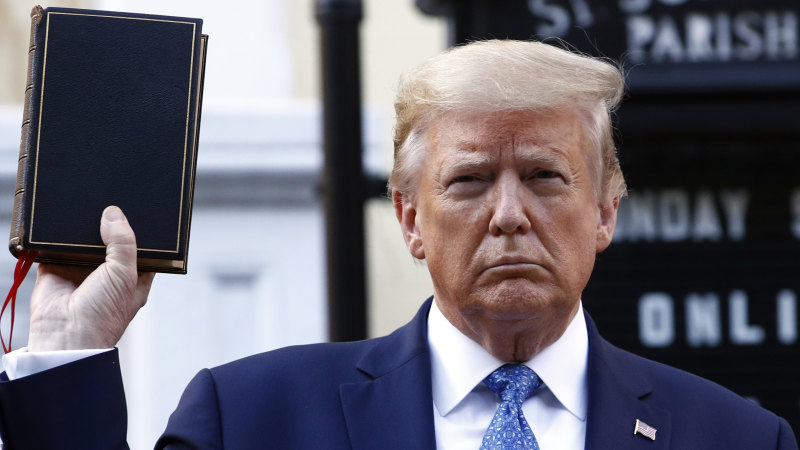


NPR on Thursday aired an alarming report on "the clear and present danger of Trump's enduring 'Big Lie.'"

"When a violent mob stormed the U.S. Capitol on Jan. 6, 2021, the goal was to overturn the results of the 2020 presidential election and install Donald Trump in a second term. Call it an insurrection or a coup attempt. It was fueled by what's known as the "Big Lie": the verifiably false assertion that Trump won. Joe Biden won 306 votes in the Electoral College, while Trump received 232. In the popular vote, Biden won by more than seven million votes," Melissa Block reported.

Law school professor and election law expert Rick Hasen offered NPR a dire warning.

"I've never been more scared about American democracy than I am right now, because of the metastasizing of the 'Big Lie,'" Hasen said. "This is not the kind of thing I expected to ever worry about in the United States. I kind of feel like a climate scientist from five years ago, or [an] expert on viruses a couple of years ago, sounding the alarm and just hoping that we're not too late already."

Yale University history professor Timothy Snyder noted Adolph Hitler used a similar strategy.

"Part of the character of the 'big lie' is that it turns the powerful person into the victim. And then that allows the powerful person to actually exact revenge, like it's a promise for the future," he explained. "The lie is so big that it reorders the world. And so part of telling the big lie is that you immediately say it's the other side that tells the big lie. Sadly, but it's just a matter of record, all of that is in Mein Kampf."

Listen:
https://www.rawstory.com/donald-trump-adolph-hitler-playbook/


The clear and present danger of Trump's enduring 'Big Lie


It's been nearly a year since the United States suffered an unprecedented attack on constitutional democracy.

When a violent mob stormed the U.S. Capitol on Jan. 6, the goal was to overturn the results of the 2020 presidential election and install Donald Trump to a second term.

Call it an insurrection or a coup attempt, it was fueled by what's known as the "Big Lie": the verifiably false assertion that Trump won. Joe Biden won 306 votes in the Electoral College, while Trump received 232. In the popular vote, Biden won by more than 7 million votes.

Many are warning that over the past year, that "big lie" of a stolen election has grown more entrenched and more dangerous.

"I've never been more scared about American democracy than I am right now, because of the metastasizing of the 'big lie,' " says election law expert Rick Hasen, co-director of the Fair Elections and Free Speech Center at the University of California, Irvine.

"This is not the kind of thing I expected to ever worry about in the United States," Hasen says. "I kind of feel like a climate scientist from five years ago or [an] expert on viruses a couple of years ago, sounding the alarm and just hoping that we're not too late already."

A "big lie" with roots in history

In rallies across the country, Trump continues to hammer on the fiction that the 2020 presidential election was stolen from him.

Speaking at a rally in Georgia in September, Trump trumpeted his familiar, baseless claim that the election was "corrupt" and "rigged."

"I have no doubt that we won, and we won big," Trump said. "The headlines claiming that Biden won are fake news — and a very big lie."

A couple of weeks later, he repeated the fiction at a rally in Iowa. "We didn't lose," he insisted to a crowd that rewarded him with chants of "Trump won!"

By inverting the narrative, attempting to slough off the "big lie" and pin it instead on his opponents, Trump exploited an age-old tactic, says Yale University history professor Timothy Snyder.

"Part of the character of the 'big lie' is that it turns the powerful person into the victim," he says. "And then that allows the powerful person to actually exact revenge, like it's a promise for the future."

Snyder, author of the books The Road to Unfreedom and On Tyranny, has spent years studying the ways tyrants skewer truth. Snyder points to Hitler's original definition of the "big lie" in his manifesto, Mein Kampf and the ways he used it to blame Jews for all of Germany's woes.

"The lie is so big that it reorders the world," Snyder says. "And so part of telling the big lie is that you immediately say it's the other side that tells the big lie. Sadly, but it's just a matter of record, all of that is in Mein Kampf."

A lie that's become embedded in public opinion
Over the past year, Trump's lie that election fraud cost him the White House has become firmly anchored in public opinion.

According to a CNN poll conducted this summer, fully 36% of Americans do not believe that President Biden legitimately won the election. Among Republicans, that number leaps to 78%.

In an NPR/PBS Newshour/Marist poll conducted in October, just 34% of Republicans say they trust that elections are fair, while 75% of Republicans say Trump has a legitimate claim that there were "real cases of fraud that changed the results." Just 2% of Democrats agreed with that statement.

What's more, says Timothy Snyder, "the 'big lie' is not just in people's minds. It's also now in the law books."

Snyder points to the raft of new laws passed in Republican-led states that restrict voting. Over the past year, at least 19 states have passed laws limiting ballot access.

In addition, Trump loyalists in battleground states are running for powerful offices that control elections. These are candidates who are endorsed by Trump, because they've embraced his lie that he won the 2020 election.

And some Republican-controlled state legislatures have moved to seize power over elections, opening a path where they could overrule voters and substitute their own slate of electors to choose the winner.

All of it, Snyder says, is a direct outcome of Trump's "big lie" and is deeply troubling for the future.

"All of those things set us up for a scenario where the candidate who loses by every measure, not just by the popular vote, but by the Electoral College, the candidate who loses by every measure will nevertheless be installed as president of the United States," Snyder says. "I think that is probably the most likely scenario in 2024 as things stand now."

That scenario needs to be confronted immediately, Snyder says: "It's right in front of our eyes. The most interesting and the most distressing thing about American news coverage right now is that we don't treat the end of democracy in America as the story. That is the story."

We delude ourselves, Snyder says, if we think we're immune from an anti-democratic turn. "We imagine that there's somehow this immovable American democratic background, which doesn't really exist," he says. "We can lose democracy just like anybody else can, just like most people have in the history of democracy. We can lose it, and we're losing it right now."

"The fierce urgency of now"

As of yet, the Democratic-led Congress has been unable to pass legislation to protect voting rights, a fact that Carol Anderson, professor of African-American Studies at Emory University, finds appalling.

She argues that passing voting rights laws would "short-circuit the damage that the 'big lie' is doing and will do."

Anderson sees "a Democratic Party that does not understand that American democracy is hanging by a thread, and does not grapple with the fierce urgency of now."

We have been, in her words, "baptized in American exceptionalism" — the naive belief that the demise of democracy can't happen here.

"Even after you have had the insurrection," Anderson says, "even after you have had these legislatures write these laws figuring out not only how to stop Black people, brown people, indigenous people from voting, but also how to lower the guardrails of democracy that prevented Trump from being able to overturn the results in these states; so even after seeing this, to not move and do what needs to be done to protect this nation?" Anderson sighs. "It's unconscionable."

For Anderson, author of the books White Rage and One Person, No Vote: How Voter Suppression Is Destroying Our Democracy, Trump's lie about the election sprouts from the same twisted roots as his birtherism lie, which is the conspiracy theory Trump peddled, falsely claiming that Barack Obama was born outside the U.S. and therefore ineligible to serve as president.

Linking both, she says, is a clear racist throughline.

"Foundational to that is the devaluation and the dismissing of American citizenship for Black people," Anderson says. "This is about, 'My nation is about the real Americans. And all of those folks aren't real Americans.' It is so vile. It is so racist. And it works. That's the thing, it works."

After all, Anderson says, if you repeat the lie enough times, it starts to sound like the truth.

A failed coup is practice for a successful one

In Congress, the House Select Committee to Investigate the January 6th Attack on the United States Capitol has interviewed hundreds of witnesses to establish the truth of what happened that day.

Rep. Adam Kinzinger, R-Ill., is one of just two Republicans on the committee. An outspoken Trump critic, he has announced he won't run for reelection.

Kinzinger compares conspiracy theories to a cancer eating away at the Republican Party, and feeding that cancer, he says, is the "big lie."

"The thing that's most concerning is that it has endured in the face of all evidence," he says. "And I've gotten to wonder if there is actually any evidence that would ever change certain people's minds."

Beyond his committee's mission of uncovering what happened on Jan. 6 itself, Kinzinger has broader questions.

"More importantly in my mind, what is the rot in the system that led up to Jan. 6? And where have we come since? And how do we stop anything like this from happening again?" he asks. " 'Cause even though Jan. 6 technically failed, there's a lot of areas where you can learn from, if your goal is to overthrow a legitimate election and potentially do it successfully next time."

And that is precisely the lesson from history, says Yale professor Timothy Snyder.

"It wasn't enough, but next time, it could well be enough. And the fact that it's been rehearsed makes me worry," he says. "This is what historians and political scientists who study coups d'etat say. They say a failed coup is practice for a successful one."

What we're potentially looking at, Snyder warns, is nothing less than the end of the democratic United States as we've come to know it.

"That's just the reality," he says. "And in order to prevent things from being frightening, you have to look right at them and say, 'OK, that's the monster. How can I disassemble it? How can I take it to pieces? How can I make sure that that story isn't our only story?' But it will be unless we tell it to ourselves straight."

We have to confront that reality, Snyder says, if we are to find the courage and conviction to do something about it.

https://www.npr.org/2021/12/23/1065277246/trump-big-lie-jan-6-election